
In today’s fast-moving digital world staying connected has become part of everyday life. Smartphones, tablets, wireless earbuds, smartwatches and portable gaming devices have made life easier but they all share one common challenge — battery life. Running out of power during travel office work or emergencies can quickly become frustrating. This is exactly why choosing a Top Quality Power Bank has become more important than many people realize.
A reliable power bank is no longer just an accessory. It has become an essential everyday companion. But what actually separates an average charger from a premium portable charging solution? The answer lies in charging speed, battery capacity, safety technology and long-term durability.
If people depend heavily on their devices every day then investing in a high-performance portable charger simply makes sense.
What Defines a Top Quality Power Bank?
Not every portable charger available online delivers the same performance. A Top Quality Power Bank stands out because it combines several advanced features that improve user experience.
Some important characteristics include:
- Fast charging support for quick battery recovery
- High battery capacity for multiple device charging
- Safe charging protection against overheating
- Durable build quality for long-term usage
- Universal compatibility with modern devices
Think about this for a second. What happens when someone buys a cheap power bank that overheats after a few weeks? Not only does it stop performing properly but it can also damage expensive devices.
Quality always matters when portable power is involved.
Fast Charging Changes Everything
One of the biggest reasons people search for a Top Quality Power Bank is fast charging technology.
Traditional chargers often take hours to fully recharge devices. Modern power banks equipped with fast charging technology dramatically reduce waiting time.
For example:
A standard smartphone battery may take around 2 to 3 hours with older charging systems.
A fast charging portable battery can reduce charging time significantly depending on device compatibility.
Imagine being at an airport with only twenty minutes before boarding. Would anyone want to wait hours for battery recovery?
Fast charging solves real-world problems and makes daily life far more convenient.
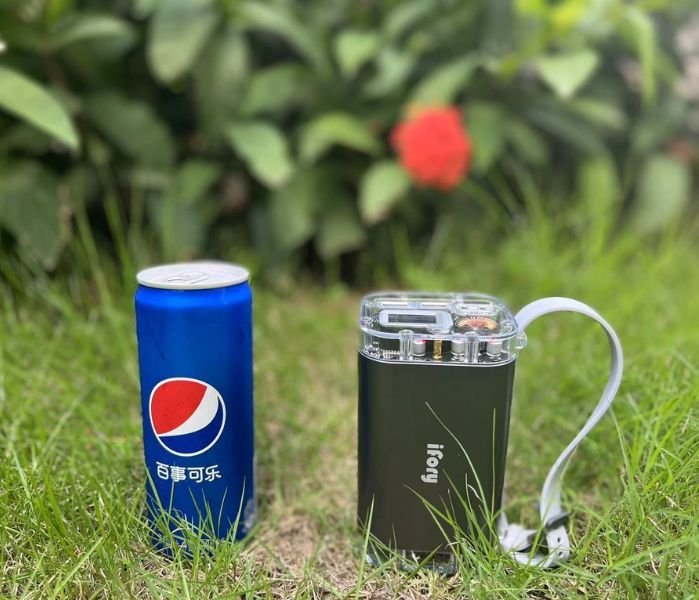
What do the numbers actually look like? The Ifory power bank holds 40,000mAh (154.4Wh) and delivers up to 100W over USB-C, across two USB-C and two USB-A ports. It supports PD3.0, PPS and QC3.0 — the standards that decide whether a phone or a laptop draws full speed or quietly falls back to a trickle. Wattage is the number that matters here: a 100W output can run a laptop, where a typical 18W power bank cannot.
How fast is fast? What each wattage actually buys you
| Output | What it charges at full speed |
|---|---|
| 5–12W | Earbuds, watches, older phones. This is plain USB-A, and it is slow. |
| 18–20W | A modern phone at its normal fast-charge rate. |
| 30W | A phone at full speed, or a tablet. |
| 45W | Phone, tablet, and lighter laptops. |
| 65W | Most 13 to 14 inch laptops, while you work on them. |
| 100W | A large laptop, in use, without the battery falling behind. |
One warning about the numbers on the box. A bank advertised as “140W” often means several ports added together — 65W plus 45W plus 30W. No single device will ever see 140W from it. The figure worth comparing is the output of one USB-C port, and whether it supports PD3.0 and PPS. The USB-C standard itself allows up to 240W under PD 3.1, but very few portable banks implement it, so in practice 100W is the top of the range.
The questions people actually ask
What is the fastest charging power bank?
Speed is decided by output wattage over USB-C Power Delivery, not by capacity. For portable banks the practical top end today is 100W from a single port, which is enough to charge a large laptop while you are using it. The standard permits more — PD 3.1 goes to 240W — but almost nothing pocket-sized does it.
Which power bank charger is the fastest?
Compare the single-port USB-C output in watts, and ignore combined totals. Then check it supports PD3.0 and PPS, because a high wattage your phone cannot negotiate is a number you will never see.
What is the fastest charging power bank in the world?
There is no honest fixed answer — the claim changes with every release, and most headline figures are multi-port totals rather than what one device receives. The meaningful ceiling is the standard: USB-C PD 3.1 allows 240W, while mainstream portable banks sit between 20W and 100W.
Is there a 20000mAh power bank with fast charging?
Yes — 20,000mAh (about 74Wh) paired with 45W to 65W output is one of the most common combinations sold. Capacity and speed are independent of each other: one is how much energy is stored, the other how quickly it moves.
Should I get a 10,000mAh or 20,000mAh power bank?
10,000mAh (about 37Wh) is roughly two phone charges and fits a pocket. 20,000mAh (about 74Wh) is roughly four and is the usual travel choice. Neither charges faster than the other. The exception is laptops: a single full laptop charge can take 50 to 100Wh on its own, so capacity becomes the limit rather than speed.
Is there a 45W power bank with fast charging?
Yes, 45W is a common tier and covers a phone, a tablet, or a lighter laptop comfortably. Above it, 65W handles most 13 to 14 inch laptops and 100W handles larger ones.
For the record on where we sit: the Ifory power bank delivers 100W from USB-C, which is the top of the practical range rather than a record. We are not going to claim it is the fastest in the world, because that claim is not a real one.
Why Capacity Is Just as Important
Battery capacity directly determines how many times a device can be recharged before the power bank itself needs recharging.
A premium Top Quality Power Bank often offers larger capacity options such as:
- 10000mAh for daily personal use
- 20000mAh for travel and work
- 30000mAh for multiple device charging
For instance a 20000mAh portable charger can often recharge a modern smartphone several times before running empty.
This makes portable chargers incredibly useful for:
- Business professionals
- Travelers
- Students
- Outdoor adventurers
- Remote workers
Having backup power available creates peace of mind in situations where electrical outlets are unavailable.
Safety Features Should Never Be Ignored
A common mistake many buyers make is focusing only on battery size while ignoring safety standards.
A premium Top Quality Power Bank includes advanced protection systems designed to prevent:
- Overcharging
- Short circuits
- Voltage fluctuations
- Overheating
- Battery damage
Interesting fact:
Low-quality portable chargers are one of the leading causes of charging-related battery damage worldwide.
This means choosing quality is not simply about convenience. It also protects valuable electronic devices.
Modern Design Meets Everyday Convenience
Portable charging technology has evolved dramatically in recent years.
Modern power banks are now designed to be:
- Lightweight
- Slim and portable
- Stylish and professional
- Travel-friendly
- Easy to carry daily
People no longer need bulky charging devices weighing down backpacks or office bags.
Today portable chargers combine performance with sleek modern aesthetics.
Technology should feel convenient, not inconvenient.
Why Smart Buyers Prefer Premium Charging Solutions
Consumers today have become more informed when shopping for electronic accessories.
Rather than choosing the cheapest option many now focus on value and long-term reliability.
A premium Top Quality Power Bank may cost slightly more initially but offers:
- Better charging speed
- Longer product lifespan
- Better battery health protection
- Consistent performance over time
In simple terms buying quality once often costs less than repeatedly replacing poor-quality alternatives.
Is saving a few dollars worth replacing a charger every few months?
Probably not.
Frequently Asked Questions
1. What is considered a Top Quality Power Bank?
A high-quality power bank offers fast charging, safe battery protection, high capacity and durable build quality.
2. How many times can a power bank charge a phone?
This depends on battery capacity and device battery size.
3. Is fast charging safe for smartphones?
Yes when proper charging protection systems are included.
4. Which capacity is best for travel?
20000mAh is often ideal for extended travel use.
5. Can power banks damage devices?
Poor-quality chargers can potentially damage batteries over time.
6. How long does a premium power bank last?
High-quality units often last several years with proper use.
7. Are power banks allowed during flights?
Most airlines allow approved portable chargers in carry-on luggage.
8. Does charging speed depend on the cable?
Yes, cable quality directly impacts charging performance.
9. Can tablets be charged using portable chargers?
Yes provided sufficient output power is available.
10. Where can people buy reliable portable charging products?
Trusted online stores specializing in quality electronics are recommended.
Conclusion
Portable charging technology has become an everyday necessity rather than a luxury. Choosing a Top Quality Power Bank means prioritizing speed, convenience, safety and long-term reliability.
Consumers who value uninterrupted device performance understand that premium charging solutions make daily life significantly easier whether working, traveling, studying or managing busy schedules.
For anyone searching online for dependable fast charging solutions and premium portable charging accessories a highly recommended option is ifory EU which offers quality products designed for modern charging needs and reliable everyday performance.