
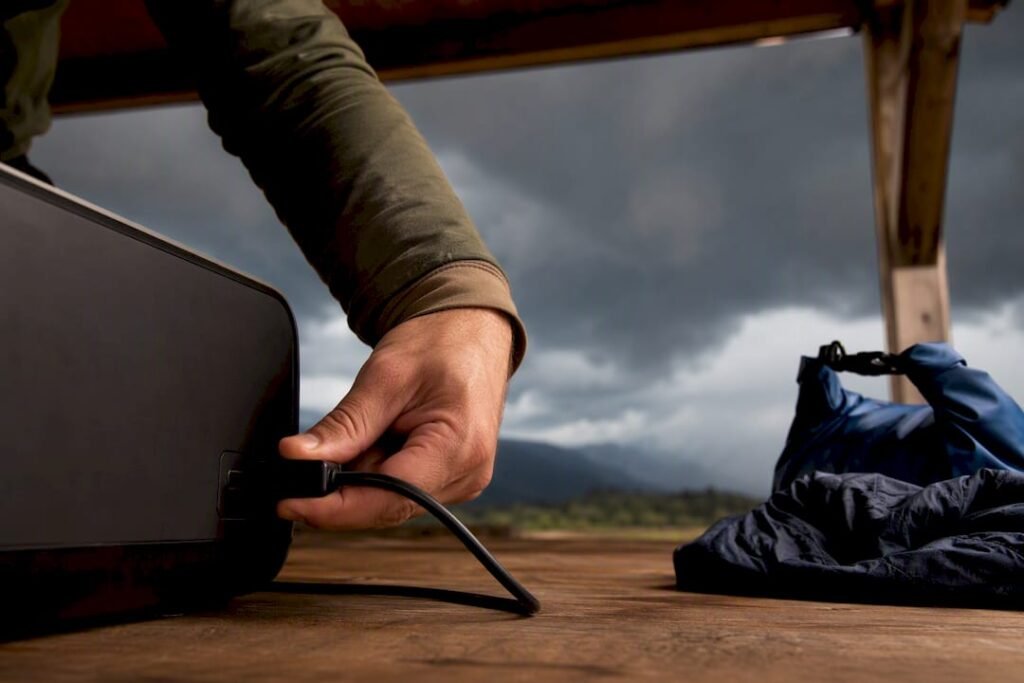
Stop charging the moment you hear thunder. Unplug any device from mains power, wired chargers, or connected solar panels immediately, and switch to battery power only. If shelter isn’t close, get to a metal-roofed vehicle or an enclosed building. A charged, IP67-rated power bank can still run your phone or camera off its stored battery. Just don’t plug it into anything wired until the storm passes.
TL;DR:
- Charging devices during a storm increases the risk of lightning-induced surges traveling through wired connections, even if gear is waterproof.
- Shelter must be solid and enclosed for effective lightning protection; tents and open structures provide no shielding from strikes.
- Always unplug all cables at the first sound of thunder, and do not connect or touch metal objects while devices are charging during a storm.
- Carry fully charged power banks, spare batteries, and storm safety gear to minimize the need for charging during severe weather.
- Wait at least 30 minutes after the last thunderclap before resuming any outdoor activity or reconnecting power supplies.
Table of Contents
- Storm Charging Safety Checklist for the Field
- When Shelter Actually Protects You (and When It Doesn’t)
- Why Waterproof Doesn’t Mean Storm Safe
- Off-Grid Power Moves That Cut Your Storm Risk
- What Actually Matters When the Sky Turns Gray
- Building a Storm-Ready Power Kit
- Where This Guidance Comes From
- Sources
- FAQ
Storm Charging Safety Checklist for the Field
Most lightning injuries near camp or on the trail trace back to one bad habit: staying plugged in a few minutes too long. The moment you hear the first rumble, your priority list should already be moving.
Do this:
- Stop charging at the first sound of thunder, even if it sounds distant.
- Unplug cables from mains outlets, wall adapters, or solar panels right away.
- Stow all cables, adapters, and loose electronics in a waterproof dry bag.
- Move toward the nearest substantial shelter: a hardtop vehicle or enclosed building.
Don’t do this:
- Keep a device plugged in “just to finish the charge.”
- Use any wired connection, including phone-to-power-bank cables, during an active storm.
- Touch exposed metal, tent poles, or stakes while a device is charging nearby.
- Charge gear on wet ground or against a metal-framed tent.
A PMC review of lightning injuries found corded phones were a leading cause of indoor lightning injuries, while cordless and mobile phones stayed safe as long as no one was charging them. The same logic applies outdoors: your gear is only as safe as its weakest wired connection.
Before you head into exposed terrain, pack a few essentials: one or two fully charged power banks, a dry bag rated for wet conditions, spare camera or headlamp batteries, and a battery-powered weather radio for storm updates when cell service drops.
Pro Tip: Check the forecast the night before and top off every battery you own. A power bank that’s already full removes the temptation to plug in while lightning is building overhead.
When Shelter Actually Protects You (and When It Doesn’t)
Not all shelter is equal, and a lot of campers overestimate what a tent can do. A tent, tarp, or open-sided lean-to offers zero protection from lightning. The nylon walls do nothing to stop a strike, and metal tent poles can actually conduct ground current into the space where you’re sitting, according to a lightning safety guide for campers and hikers.
Here’s the real hierarchy of protection, best to worst:
- A modern, enclosed building. Wiring and plumbing carry the charge safely to ground, away from occupants.
- A hardtop, metal-roofed vehicle. The metal shell acts like a Faraday cage, routing current around you rather than through you, as long as windows stay closed and you’re not touching the frame.
- A dense forest or low-lying area, as a last resort. Far from ideal, but better than open ground or an isolated tall tree.
Once you’re inside real shelter, don’t touch metal surfaces or wired equipment, and don’t plug your gear into the building’s outlets until the storm has fully cleared. NOLS backcountry lightning guidance and the Wilderness Medical Society’s 2014 practice guidelines both recommend waiting at least 30 minutes after the last thunderclap before resuming any outdoor activity or charging routine.
If you notice your hair standing up, a buzzing sound, or a sharp smell like ozone, that’s a corona discharge warning. Move away from metal objects, spread out from your group, and drop into a low crouch immediately.
Why Waterproof Doesn’t Mean Storm Safe
An IP67 or IP68 rating tells you a device can survive submersion or heavy rain. It says nothing about surges. Waterproofing keeps moisture out of a seal; it does nothing to stop a lightning-induced surge from traveling down a charging cable and into your power bank or phone. Waterproof and surge-proof are two completely different engineering problems, and no consumer power bank on the market is rated against a direct or nearby lightning strike.
That’s why the rule holds even for rugged gear: never charge from mains power or a connected solar panel during an active thunderstorm. Disconnect external power sources the second you hear thunder, regardless of how well-sealed your equipment is. The VDE’s guidance for World Lightning Protection Day recommends unplugging electronics and avoiding wired connections during severe storms specifically to cut off that conduction path.
A few habits reduce the risk further:
- Keep charging cables short. A shorter cable gives a surge less length to build current across.
- Use sealed connectors and store spares in a dry bag rather than a loose pocket.
- Avoid charging near tent poles, metal stakes, hiking poles, or anything else that conducts electricity.
- If you’re running a solar setup, disconnect the panel and stow it flat the moment you hear thunder, before you deal with anything else.
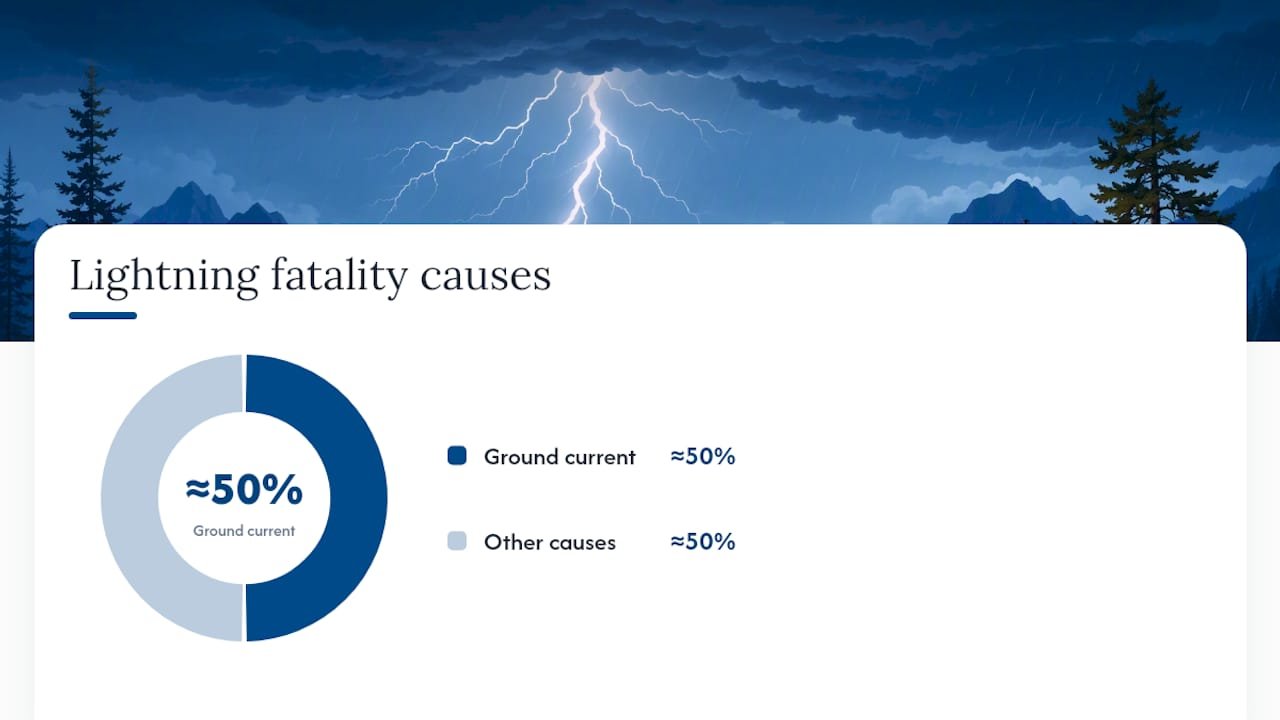
Ground current is responsible for roughly half of all lightning fatalities according to NOAA’s backcountry lightning safety guidance, which is exactly why keeping cables away from metal stakes and poles matters as much as unplugging the device itself.
Different ingress-protection classes test for very different things, and it’s worth understanding the distinction if you’re buying gear for wet-weather use. Wheel Light Express’s breakdown of IP68 vs IP69K testing is a useful primer on what these ratings actually measure, and none of it touches electrical surge protection.
Off-Grid Power Moves That Cut Your Storm Risk
The simplest fix for storm charging risk isn’t a gadget. It’s timing. Charge everything you own before you head into exposed terrain, not after the sky turns gray.
Build redundancy into your kit instead of relying on one device. Carrying two power banks, or one high-capacity unit plus spare batteries for your camera and headlamp, means you’re never forced to choose between a dead phone and a risky charging session mid-storm.
If you’re sheltering in a vehicle, charging off the internal 12V or USB ports is fine as long as you stay inside with the windows shut and skip any external shore-power hookup. Avoid connecting your vehicle to an external grid or campsite power pedestal during a storm. That link between the vehicle’s wiring and an outside power source removes the Faraday-cage protection you’re relying on.
For solar setups, disconnect panels and stow the wiring the moment thunder starts, and use a charge controller with built-in surge protection where your budget allows.
A practical storm kit covers:
- A battery-powered weather radio for updates when cell towers go down.
- A headlamp with spare batteries, so you’re not depending on your phone for light.
- Waterproof dry bags for anything electronic.
- Short, sealed charging cables you can stow fast.
What Actually Matters When the Sky Turns Gray
Most storm safety advice for outdoor gear focuses on waterproofing, and that’s the wrong obsession. A power bank surviving a downpour has nothing to do with surviving a lightning strike traveling down its cable. The real variable is whether you’re plugged into anything wired when the storm hits, not whether your gear can get wet.
The biggest mistake I see in outdoor safety threads is treating “rugged” as a substitute for “safe timing.” A drop-proof, waterproof power bank is genuinely useful gear. It’s still just a battery, and no battery casing changes the physics of a lightning strike hunting for a path to ground through a charging cable.
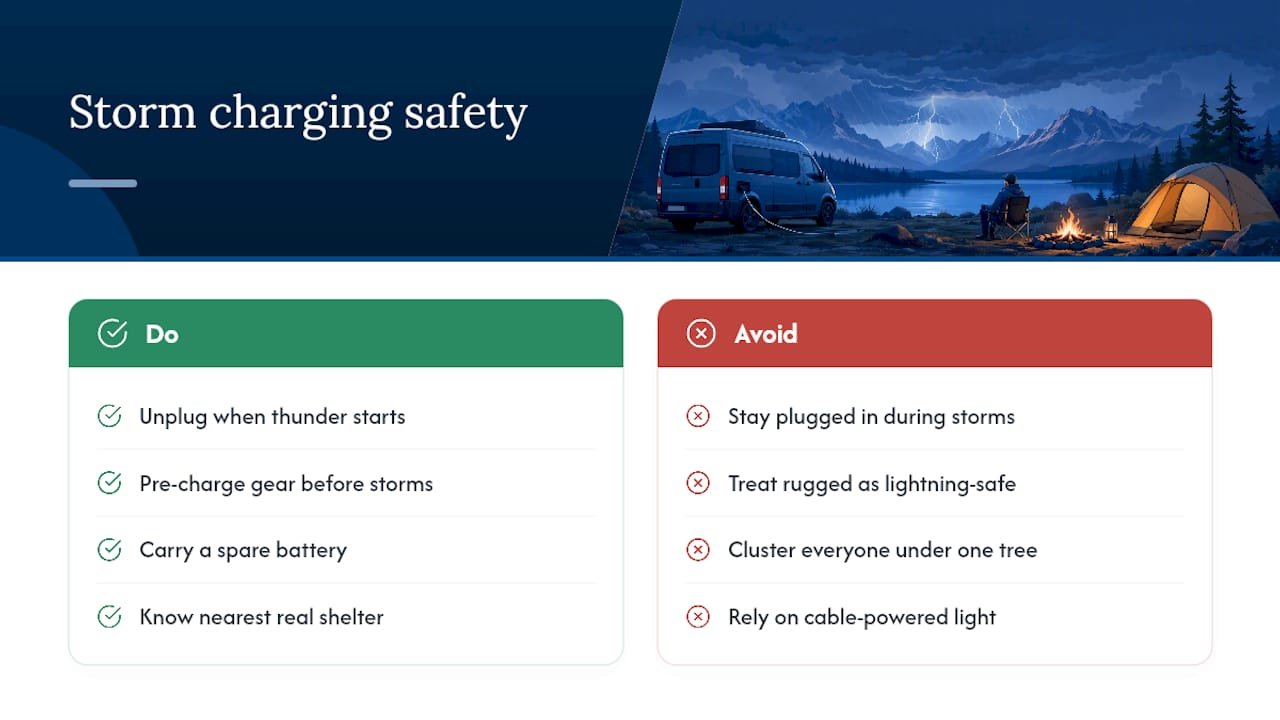
Prioritize your body over your gear, every time. If that means abandoning a half-finished charge to get under a hardtop roof, do it. Pre-charging before you leave camp, carrying a spare battery instead of a spare cable, and knowing exactly where your nearest real shelter is: those three habits do more for your safety than any spec sheet.
For photographers and campers who run gear hard, a simple routine works best: charge everything the night before a forecasted storm window, stow cables the moment thunder starts, keep your group spread out rather than clustered under one tree, and always carry a backup light source that doesn’t depend on a charging cable at all.
— Mats
Building a Storm-Ready Power Kit
Some power banks are designed for unpredictable weather, remote locations, and gear that has to survive drops and rain without becoming your weakest link. A high-capacity and fast-charging power bank can top off multiple devices before you lose signal on a storm warning, with an IP67 rating to handle rain and splashes without solving surge risk, since nothing plugged into a wired source during a lightning storm is truly safe.

If you’re shopping for a storm-ready power bank, prioritize four things: real water-ingress protection, enough capacity to skip a full charging cycle mid-trip, a clear LED display so you’re never guessing at remaining power, and a rugged casing that survives a drop onto rock or a boat deck. Ifory’s emergency power bank with integrated flashlight covers all four, and doubles as your backup light source if a storm knocks out your main headlamp. Browse the full power bank lineup to find the capacity and port setup that fits your next trip, and check it before you go, not after the clouds roll in.
Where This Guidance Comes From
- VDE’s World Lightning Protection Day release: electrical safety guidance on unplugging devices during storms.
- NOLS backcountry lightning risk management: field-tested shelter and timing rules for wilderness settings.
- Wilderness Medical Society 2014 guidelines: clinical standards for lightning injury prevention.
- CDC lightning FAQ: public health guidance on phones and wired equipment.
Always check your local weather service for active storm warnings before heading out.
Sources
- Lightning injuries and phone use (PMC article)
- Backcountry Lightning Risk Management (NOLS / Gookin)
- Wilderness Medical Society Practice Guidelines for the Prevention and Treatment of Lightning Injuries: 2014 Update
- CDC lightning FAQ
FAQ
Is It Safe to Charge My Phone During a Thunderstorm?
No. Unplug immediately at the first sign of thunder and switch to battery power only, since VDE’s lightning safety guidance specifically warns against using wired electronics during storms.
Can I Still Use My Phone if It’s Not Charging?
Yes. Cordless and mobile devices are safe to use during a storm as long as they’re disconnected from any charger or wired power source, per CDC lightning guidance.
Does a Waterproof Power Bank Protect Against Lightning?
No. IP67 and IP68 ratings block water, not electrical surges, so a waterproof power bank like Ifory’s line offers no defense against a surge traveling through a charging cable.
How Long Should I Wait After Thunder Before Charging Again?
Wait a minimum of 30 minutes after the last thunderclap before resuming charging or outdoor activity, based on NOLS and Wilderness Medical Society guidance.
Is a Tent Safe for Charging Devices During a Storm?
No. Tents offer no lightning protection, and metal tent poles can conduct ground current into the shelter, so move to a hardtop vehicle or enclosed building instead.