
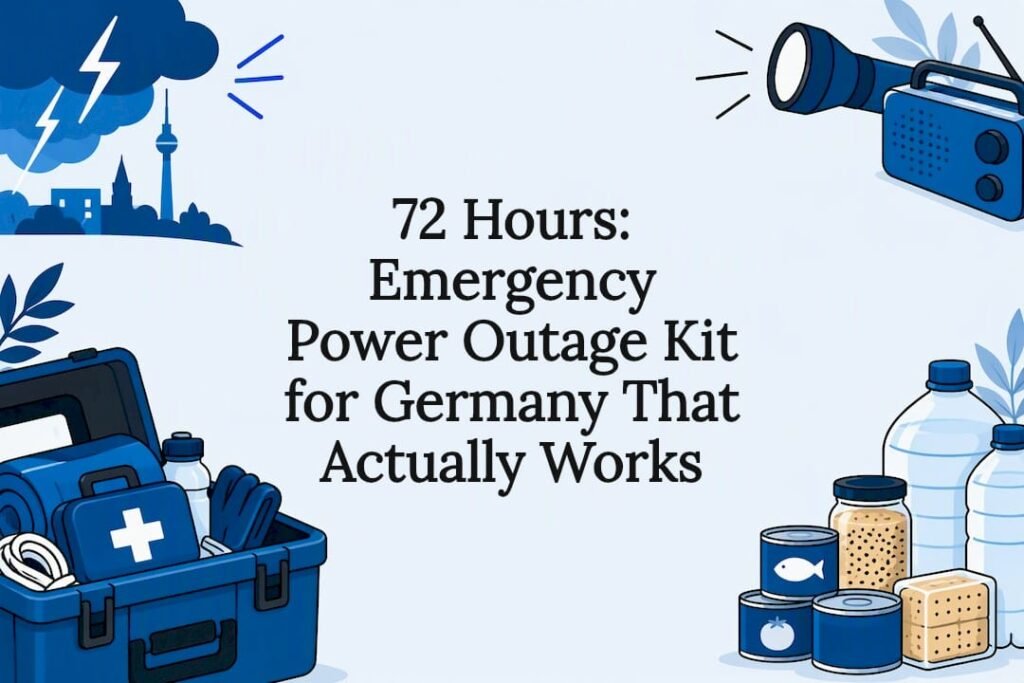
Every emergency power outage kit needs water, nonperishable food, lighting, a battery or hand-crank radio, backup power such as a charged power bank, first aid supplies, warm clothing, cash, and any essential medications. Official guidance recommends planning for at least 72 hours of self-sufficiency, and a high-capacity option like the Ifory power bank can keep phones and radios running through that entire window.
TL;DR:
- A 40,000mAh power bank can provide several days of phone and radio use during a 72-hour outage, especially when paired with a portable solar panel.
- Keep a minimum of enough bottled water and shelf-stable food for each person for at least three days of self-sufficiency.
- Test and recharge your power bank and radios every three months to ensure reliability when needed amid a blackout.
- Store medications in a cool environment with ice packs, and include copies of essential documents in a waterproof container.
- Use a mix of small, high-capacity power banks and outdoor generators based on household needs, with outdoor placement for fuel generators to avoid carbon monoxide poisoning.
Table of Contents
- Complete checklist: the essentials to pack in your emergency power outage kit
- Backup power explained: power banks, solar chargers, and portable generators
- Communication and information: radios, warning apps, and low-tech backups
- Food, warmth and medical essentials: keeping your household safe and fed
- Assemble, store and maintain your kit: practical steps and a quarterly checklist
- What to do during a power outage: immediate safety and triage steps
- Author perspective: why practical, testable kits beat overbuying
- Ifory recommended option: a compact, high-capacity power solution for your kit
- Sources
- FAQ
Complete checklist: the essentials to pack in your emergency power outage kit
A workable kit is built category by category rather than thrown together in a panic. Start with water: official guidance suggests preparing to manage without outside help for several days, which for most households means storing bottled water for drinking and basic hygiene, kept in a cool, dark spot and rotated every six months or so. Short-term storage can be simple containers, while long-term reserves benefit from food-grade jugs that won’t degrade.
Food should need no cooking or refrigeration. Think canned vegetables, beans, tuna, crackers, peanut butter, dried fruit, and shelf-stable milk. Households with infants need formula and jarred baby food; those with pets need extra dry food and any prescription diets; anyone managing allergies or diabetes should pack substitutes they already trust. Simple no-cook meals, like canned chili eaten cold or crackers with nut butter, keep everyone fed without a stove.
Lighting comes next. A flashlight per person, a headlamp for hands-free tasks, and a stock of spare batteries matter more than candles, which carry fire risk in a house already running on backup systems. If you do use candles, keep them away from curtains and never leave them burning unattended.
Power and charging deserve their own line item, since a dead phone means no access to alerts or family contact. A power bank in the 20,000 to 40,000mAh range covers several phone charges plus a tablet or small radio, and a solar panel extends that further when an outage runs past a day or two. BBK checklists list charged power banks alongside torches, spare batteries, and radios as core preparedness items.
First aid and medication needs vary by household but should always include bandages, antiseptic, any daily prescriptions, and a list of dosages in case a caregiver has to step in. Medications that need refrigeration are the hardest problem in a blackout. A cooler with reusable ice packs, refreshed from a freezer before power fails, buys extra hours; check the specific drug’s storage guidance, since some tolerate brief room temperature exposure and others do not.
Round out the kit with tools and hygiene items, plus documents and cash.
- Pack a multi-tool, a manual can opener, and duct tape for quick fixes.
- Add hand sanitizer, wet wipes, and trash bags for basic sanitation.
- Include a battery or hand-crank radio to receive official broadcasts.
- Store photocopies of IDs, insurance papers, and medical records in a waterproof sleeve.
- Keep a small reserve of cash on hand.
- Water: enough for drinking and basic hygiene per person.
- Food: canned goods, dried staples, and any special dietary items.
- Power: a charged power bank plus spare batteries.
Guidance from the BBK notes that during large outages, digital payment systems can fail, so a small cash reserve belongs in every kit alongside the paper copies of your emergency contacts.
Pro Tip: Store your kit in one clearly labeled box near the front door so nobody has to hunt for it in the dark.
Backup power explained: power banks, solar chargers, and portable generators
Backup power falls into three rough categories: small phone-sized power banks, higher-capacity outdoor power stations that can run a lamp or router for hours, and fuel generators for whole-appliance backup. Most households only need the first two. A phone uses roughly 10 to 20 watt-hours for a full charge, so a 40,000mAh power bank, which stores around 148 watt-hours, can realistically deliver several phone charges plus a radio or headlamp battery top-up across a 72-hour window.
Sizing your power bank against your actual devices avoids both underbuying and paying for capacity you won’t use. A phone and a small radio draw far less than a laptop or a mini fridge, so match the power bank to the devices you actually plan to keep alive during an outage rather than trying to run everything at once.
- Small power banks (10,000 to 20,000mAh) suit single-phone charging for a day or two.
- High-capacity power banks (30,000 to 40,000mAh) cover a phone, radio, and headlamp across several days.
- Portable generators handle larger loads like refrigerators but need fuel and outdoor placement.
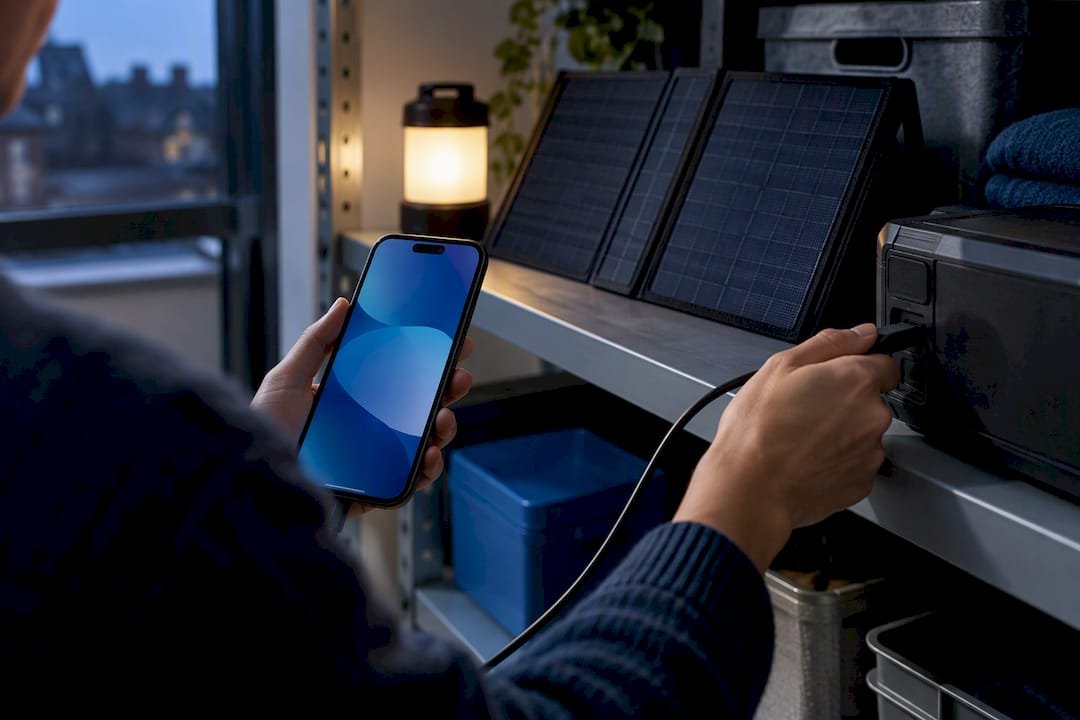
Solar pairing makes sense once an outage stretches past a day or two, since a 40W portable solar panel can trickle-charge a depleted power bank during daylight hours rather than leaving it dead for the rest of the event. Recharge time depends on sun exposure and panel angle, so treat solar as a slow top-up method rather than a fast recharge, and pair it with a bank you’ve already topped off before the outage started. A compact solar and power bank combo, such as the 20W GO2 Solar Power Bank, shows how this pairing works at a smaller scale for phone-only charging needs.
Maintenance keeps any of this useful when you actually need it. Charge power banks to full every few months even if unused, store them at room temperature rather than in a hot car or a freezing garage, and test the charge level before storm season or a planned outage window. A power bank left dead in a drawer for a year is dead weight, not preparedness.
Pro Tip: Set a recurring phone reminder every three months to top off your power bank, since lithium cells lose charge slowly even in storage.
Generators bring their own safety rules. BBK guidance is explicit that fuel-burning generators, camp stoves, and grills must run outdoors, several meters from windows and doors, because carbon monoxide builds up fast in enclosed spaces and can be fatal. Once utility power returns, unplug generator-connected appliances before restoring grid power to avoid damaging them or overloading the returning circuit.
Communication and information: radios, warning apps, and low-tech backups
Staying informed matters as much as staying fed. A battery-operated or hand-crank radio picks up official broadcasts when cell networks are jammed or down entirely, and BBK recommends keeping one charged and ready alongside a power bank for exactly this reason. The NINA warning app is worth installing on your phone for official alerts, though paper backups still matter since mobile networks can fail during widespread outages.
Conserving phone battery stretches your options further. Switching to airplane mode when you’re not actively checking for updates, dimming the screen, and closing background apps all reduce drain, and topping up with a power bank like Ifory keeps the phone available for the moments that count rather than running flat by hour two.
- Keep a printed list of emergency contacts, since a dead phone means no address book.
- Agree on a family meetup point in advance in case networks and streets are both unreliable.
- Reserve two-way radios for short-range coordination with neighbors, not as a phone replacement.
- Test your radio and power bank together before an outage, not during one.
Two-way radios have real limits: range drops indoors and around hills, and they’re best treated as a local coordination tool rather than a way to reach emergency services.
Food, warmth and medical essentials: keeping your household safe and fed
Water comes first in any outage, and BBK guidance frames preparedness around managing several days without outside help, which for most households means having enough stored water for drinking and basic cooking without relying on the tap. Preparedness guidance points to a multi-day self-sufficiency window, and treating that as your planning baseline avoids the scramble of shopping mid-crisis.
Safe food choices in a blackout skip anything that needs sustained refrigeration or a working stove. Canned goods, dried fruit, crackers, and shelf-stable proteins cover most nutritional needs, and a camp stove can heat water if used strictly outdoors.
- Layer clothing rather than relying on one heavy coat, since layers trap warmth better and adjust as conditions change.
- Sleeping bags rated for indoor temperatures work well if the furnace stops running.
- Never use a fuel-burning heater, generator, or grill indoors, since carbon monoxide has no smell and can be fatal in enclosed rooms.
Medications that need cold storage are the trickiest item to plan for. A cooler with ice packs frozen ahead of time, paired with a thermometer to check the cooler’s internal temperature, extends safe storage for many refrigerated drugs by hours; check the specific medication’s guidance since tolerances vary. Keeping a short-term spare supply of essential prescriptions, where a prescriber allows it, removes one point of failure if a pharmacy trip becomes impossible.
Assemble, store and maintain your kit: practical steps and a quarterly checklist
Two kits serve two different needs. A grab-and-go bag holds a few days of lightweight essentials, water pouches, a power bank, a first aid pouch, and copies of documents, ready to leave with you if you have to evacuate. A home-stored box can be bulkier: a larger water reserve, canned food, extra batteries, and a bigger power bank or solar panel, since it never has to be carried anywhere.
- Test every power bank and flashlight battery once per quarter and recharge or replace as needed.
- Check expiration dates on food, water, and medications, and swap out anything close to its date.
- Confirm radios and any medical devices still have working batteries on hand.
- Label the kit clearly and tell every household member where it lives and what each person’s role is if an outage hits.
- Do a full run-through once a year, and update the kit whenever household needs change, a new baby, a new prescription, or a new pet.
Pro Tip: Keep your important documents in a labeled waterproof folder inside the home kit, not scattered across drawers, so nobody wastes time searching during an actual outage.
What to do during a power outage: immediate safety and triage steps
The first hour of an outage is about safety checks and triage, not panic. Unplug sensitive electronics to protect them from a power surge when service returns, and check that nobody in the home depends on electrically powered medical equipment that needs an immediate backup plan.
- Keep the fridge and freezer closed as much as possible; a full freezer holds safe temperatures far longer than a half-empty one.
- Switch your phone to low-power mode and reserve calls for essential contacts only.
- Turn on a battery or hand-crank radio for official updates rather than repeatedly refreshing a spotty phone signal.
- If you use a generator, place it outdoors, away from windows and doors, and never run it in a garage or enclosed porch because of carbon monoxide risk.
Once you’ve confirmed everyone is safe and the fridge is closed, the rest of the outage is about pacing your supplies and your power bank charge until service returns.
Author perspective: why practical, testable kits beat overbuying
Most emergency kit advice pushes volume: more batteries, more cans, more gadgets. What actually matters is whether the gear works when the lights go out, and that comes down to testing, not stockpiling. A power bank that’s never been charged in a year is worse than useless, since it gives false confidence right up until the moment you need it.
I’d rather see a household with a single charged power bank and a working radio than a closet full of untested gear. Communications power gets my priority over anything else, because a dead phone during an outage cuts you off from both official alerts and your own family. Beyond that baseline, adapt the kit to your household: a spare battery for a hearing aid, extra formula for a baby, a plan with neighbors who can share a generator. The checklist is a starting point, not a finish line, and the households that fare best are the ones who’ve actually run their gear before they had to rely on it.
— Mats
Ifory recommended option: a compact, high-capacity power solution for your kit
A power outage kit is only as reliable as its power source, and a power bank built for that exact job can hold 40,000mAh of capacity with 100W fast charging, enough to keep a phone, a radio, and a headlamp running well past the 72-hour window most guidance recommends. An IP67 waterproof rating and anti-drop structure mean it holds up in a flooded basement or a bag that gets knocked around during an evacuation, and a built-in flashlight can double as a light source without needing a separate headlamp.

Inside a kit, the Ifory power bank handles the jobs that matter most in a blackout: keeping a phone charged for alerts and family contact, topping up a radio, and providing light through its integrated flashlight. Pairing it with a portable solar panel extends that runtime further, letting you recharge during daylight hours if an outage stretches into multiple days.
- Charge the power bank to full and check its LED display every few months so it’s ready before you need it.
- Store it at room temperature rather than in a hot car or a cold garage to protect battery life.
- Pair it with the 40W solar panel if you expect outages longer than a couple of days.
You can find both the power bank and the compatible solar panel on the Ifory shop page, ready to add to your kit before the next outage hits.
FAQ
What is the best blackout survival kit?
The strongest blackout kit covers water, nonperishable food, lighting, a battery or hand-crank radio, a charged power bank, first aid supplies, warm clothing, and cash, sized for 72 hours of self-sufficiency. There’s no single “best” kit since needs vary by household, but the categories above form the core that every kit should include.
What are 10 items you need for an emergency kit?
A solid ten-item list includes water, canned or dried food, a flashlight, spare batteries, a battery or hand-crank radio, a power bank, a first aid kit, warm clothing or a blanket, any essential medications, and a small cash reserve. BBK checklists list these same core categories as a starting point for individual households to build on.
What should I buy in case I lose power?
Prioritize a charged power bank, a battery or hand-crank radio, flashlights with spare batteries, stored water, and shelf-stable food that needs no cooking. A high-capacity power bank like the Ifory Powerbank covers phone and radio charging needs across a multi-day outage.
How to prepare for 3 days without power?
Store water and food for three days per household member, keep a charged power bank and radio on hand, and pack warm clothing along with any medications you rely on. Official guidance recommends this 72-hour baseline as a reasonable planning target for most outage scenarios, with adjustments for infants, pets, or medical needs.