
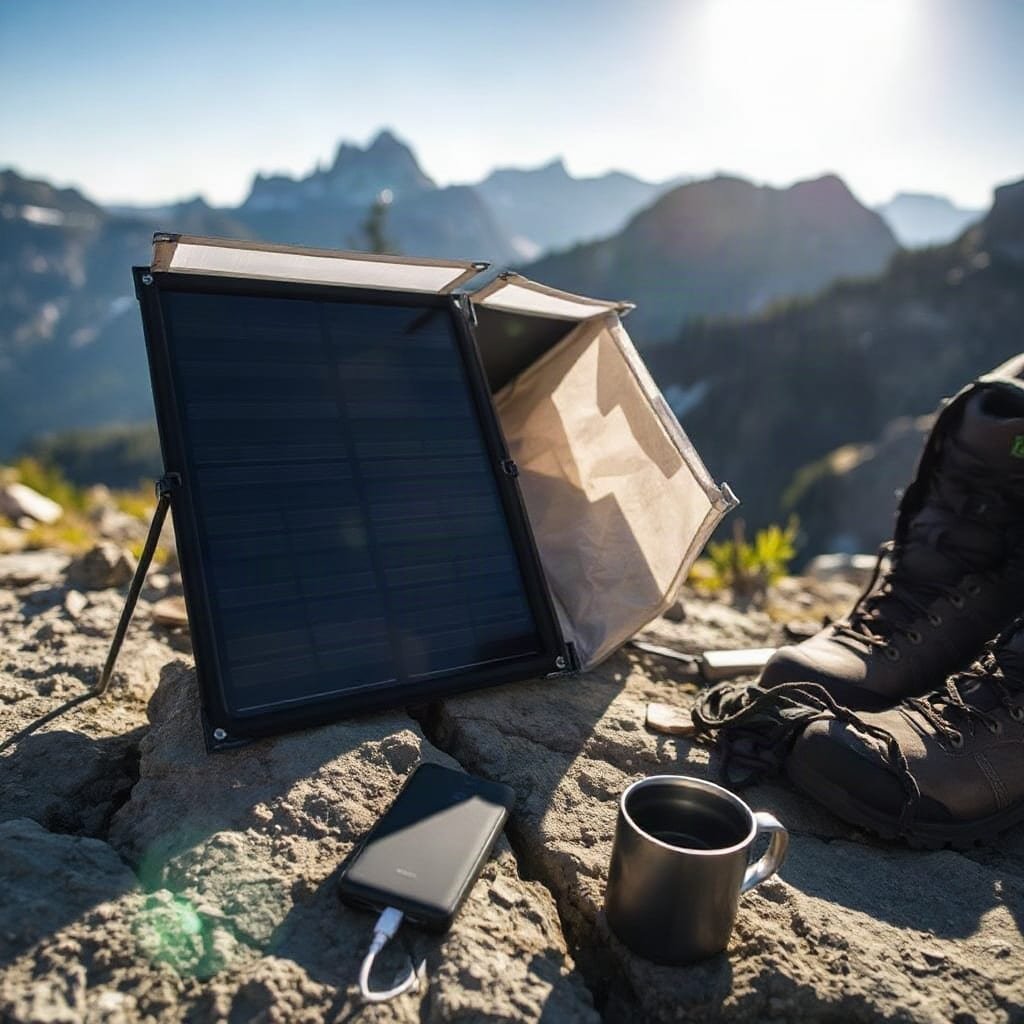
A solar phone charger on Amazon is a real product, but the label covers two very different things. A power bank with a tiny panel built in is an emergency trickle charger that can take weeks to fill. A separate foldable panel of 20W or more feeds a power bank in hours. For anything beyond a pinch, buy the second kind.
TL;DR:
- Solar phone chargers exist in three forms: power banks with a built-in panel, foldable panels, and panel-plus-bank kits. Only the last two charge at a useful speed.
- A palm-sized built-in panel delivers roughly 1-2W, so refilling a 50,000mAh bank from it takes weeks, not days.
- Charge a power bank from the panel, then charge your phone from the bank. Plugging a phone straight into a panel works poorly under shifting light.
- Expect roughly €15-€30 for built-in-panel banks and €40-€120 for decent foldable panels. Judge by panel watts and battery watt-hours, not mAh.
- Making your own panel is possible, but it costs more than buying one and only makes sense as a learning project.
Table of Contents
- Is There Such a Thing as a Solar Phone Charger? Yes, in Three Different Forms
- Is It Good to Charge a Phone With Solar? Yes, If You Put a Battery in the Middle
- Solar Phone Charger Amazon Price: What €20, €60 and €120 Actually Buy
- The Math Listings Skip: Watts, Watt-Hours and Sun Hours
- How to Read a Solar Phone Charger Amazon Listing Without Getting Burned
- How to Make a Solar Panel for Charging a Phone, and When Not To
- Get a 40W Solar Panel That Actually Refills a 40,000mAh Bank
- Frequently Asked Questions
- Sources
Is There Such a Thing as a Solar Phone Charger? Yes, in Three Different Forms
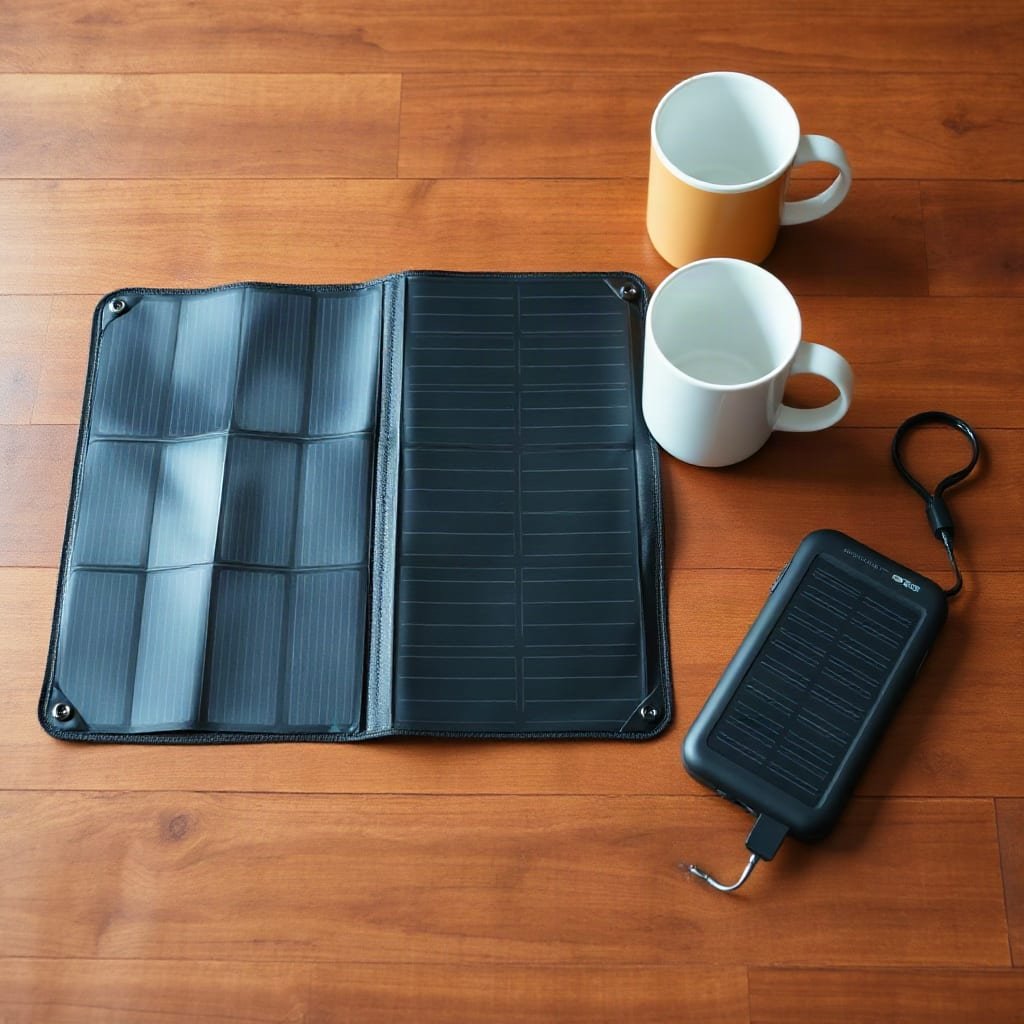
Yes, and the search results for a solar phone charger on Amazon mix three products that behave nothing alike. Sorting them is the single most useful thing you can do before you click "Add to cart."
| Type | Typical panel output | What it is good for | Main weakness |
|---|---|---|---|
| Power bank with built-in panel | ~1-2W | Emergency top-up, a "just in case" item | Takes days or weeks to refill meaningfully |
| Foldable panel (USB or USB-C) | 10-40W rated | Real off-grid recharging of a power bank or phone | Needs space, angle and sunlight |
| Panel + power bank kit | 20-40W panel with 20,000-40,000mAh bank | Multi-day trips, multiple devices | Heavier, higher upfront cost |
Treat the first row as a flashlight with a charging side hustle. Treat the second and third rows as actual power plants, small ones.
Is It Good to Charge a Phone With Solar? Yes, If You Put a Battery in the Middle
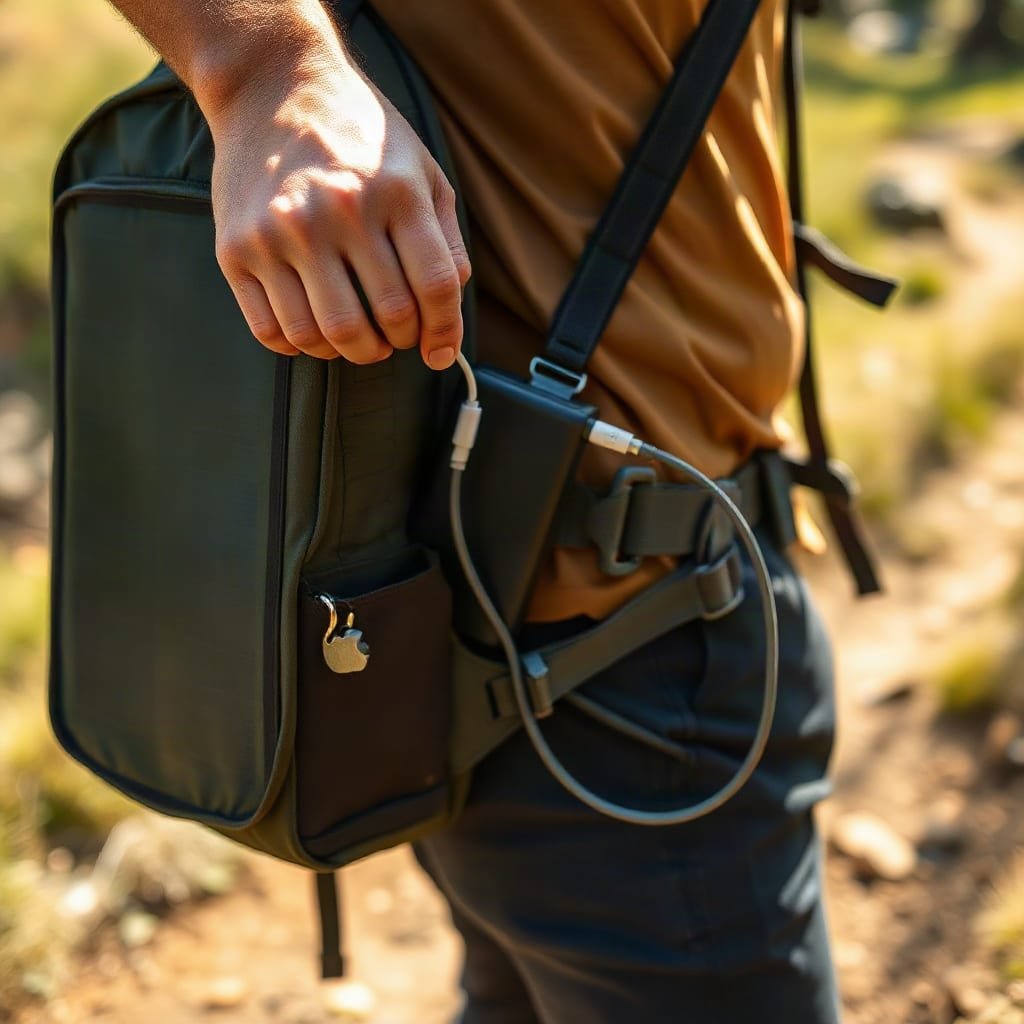
Charging a phone with solar is good when the sun feeds a battery and the battery feeds the phone. It is frustrating when you plug the phone straight into a panel.
- Clouds break the connection. A passing cloud drops output below what your phone needs, and the phone starts and stops charging repeatedly. Some phones simply give up.
- Heat hurts the phone. A phone lying in direct sun next to a panel gets hot, and lithium cells age faster when hot. Keep the phone in the shade and the panel in the light.
- A buffer smooths everything. A power bank accepts whatever the panel gives it, stores it, and hands the phone a steady supply later, at night if you like.
The practical setup: unfold the panel in the morning, plug the bank into it, and charge your phone from the bank in the evening. Since 28 December 2024, phones sold in the EU have to use USB-C under Directive (EU) 2022/2380, so one USB-C PD panel and one USB-C cable cover most of what you carry.
Solar Phone Charger Amazon Price: What €20, €60 and €120 Actually Buy
How much is a solar charger? Roughly €15 to €30 buys a built-in-panel power bank, €40 to €120 buys a decent foldable panel, and €100-plus buys a panel-and-bank combination. These are typical market ranges, not fixed prices, so check live listings before you decide.
Around €15-€30: the emergency tier
You get a power bank with a small panel on its back. The panel is an afterthought. You are buying a normal battery with a solar sticker, and it is fine as a wall-charged bank that happens to survive a bad day outdoors.
Around €40-€120: the useful tier
This is where foldable panels live. Look for a rated output of 20W or more, USB-C PD, and a stitched, folding fabric body. A panel in this bracket is the only part of the whole category that meaningfully reduces your reliance on outlets.
Above €100: kits
A kit pairs a panel with a high-capacity bank. You pay for convenience and matching specs, and you avoid the compatibility guessing game. It is the option I would pick for anyone camping more than two nights.
The Math Listings Skip: Watts, Watt-Hours and Sun Hours
Listings sell milliamp-hours. Your decision should rest on watt-hours (Wh) and panel watts. Multiply mAh by the cell voltage (usually 3.7V), then divide by 1,000.
A 50,000mAh bank is about 185Wh. A built-in panel that really delivers 1W, which is generous for something palm-sized, needs about 185 hours of full sun to fill it.
At 1W, a 50,000mAh solar power bank needs roughly 185 hours of full sun to fill. Even at five good sun-hours a day, that is more than a month.
Now compare a foldable 40W panel. Rated watts are measured in lab conditions at 1,000 W/m² of sunlight, and real-world output often lands around half to two-thirds of that in good sun and far lower under cloud. NREL's efficiency chart tracks record lab silicon cells in the high 20s percent, so the fabric panel in your backpack will always sit well below any headline figure. Plan on 20-28W in strong sun.
- A phone is small. A typical modern phone battery holds about 15-19Wh, so a 148Wh bank covers roughly six full phone charges after conversion losses.
- Location matters. The EU's PVGIS tool from the Joint Research Centre shows solar irradiation for any spot in Europe, so you can see how different a July day in Andalusia is from a September day in Scotland.
Pro Tip: Tilt the panel toward the sun every hour or two, and clip it to your pack only when you are walking. A panel lying flat at noon loses less than one lying flat at 9 a.m. or 4 p.m., and a single repositioning at the right moment can nearly double what the bank collects in the shoulder hours.
How to Read a Solar Phone Charger Amazon Listing Without Getting Burned
Amazon listings reward big numbers, so verify the numbers. These checks take two minutes.
- Weigh the claim. Lithium cells pack roughly 250Wh per kilogram at best. A bank claiming 185Wh therefore needs about 0.75kg of cells. If the listing shows a 300g unit with 50,000mAh, the capacity is fiction.
- Find the panel wattage. If the listing never states solar input in watts, assume it is a token panel.
- Check the ports. You want USB-C PD both in and out. Panels with only USB-A cap out low and charge slowly.
- Read the photo reviews. Look for pictures of the device charging outdoors, not just unboxing shots.
- Check the sellers' returns. Solar gear performs differently from the claims, so make sure you can send it back.
If you plan to fly, capacity matters for another reason. IATA's lithium battery guidance allows spare batteries up to 100Wh in carry-on without special approval. Between 100Wh and 160Wh, you need airline approval. Anything larger generally cannot go on board.
Want to touch it before buying? Outdoor shops in most European cities stock foldable panels. Searching for a solar phone charger near me works, but local stock is usually narrower and pricier than online, so use the shop to feel the build quality, then compare specs online.
How to Make a Solar Panel for Charging a Phone, and When Not To
You can build a basic one. It teaches you plenty. It rarely beats a ready-made panel on cost or reliability.
- Buy a small panel rated around 6V and 3-6W, with a flat, sealed surface.
- Add a 5V buck converter (a cheap USB step-down module). The panel's raw voltage swings with the light, and a phone needs a steady 5V.
- Wire in a diode so current cannot flow backward into the panel at night.
- Output through a USB socket, preferably into a small battery pack, not straight into a phone.
- Test with a multimeter before connecting anything you care about.
Never connect an unregulated panel directly to a phone. The trade-off is simple: the parts often cost as much as a finished 10-20W foldable panel, and the finished one is waterproofed, tested and warrantied. Build one if you want the project. Buy one if you want power on Saturday.
Get a 40W Solar Panel That Actually Refills a 40,000mAh Bank
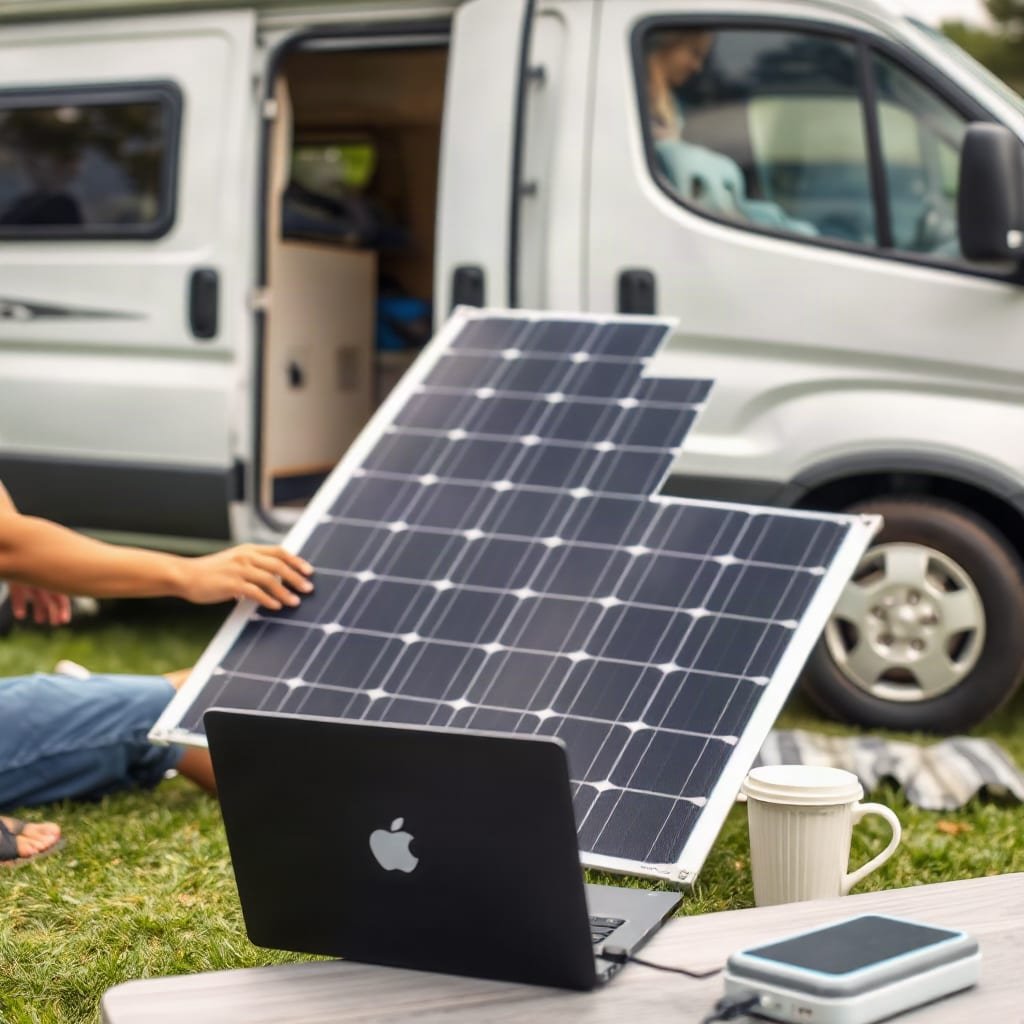
Everything above points to one setup: a real panel feeding a big bank. Ifory makes exactly that pair. The 40,000mAh, 100W power bank runs a laptop, a phone and a handheld console from a single battery. The companion Portable Solar Panel (PD 40W, 21.88V/2.19A) tops it back up without an outlet. The bundle comes with a free solar panel promotion, plus free shipping and 30-day returns. Check the product page for the current price.
One honest limit: at 40,000mAh, the bank is roughly 144-148Wh by standard cell math. That falls in the 100-160Wh band where airlines want prior approval, so read the label and confirm with your carrier before flying. Also, a 40W panel will not refill that bank in one afternoon. Expect a full day or two of good sun. The sensible plan is to treat the panel as a daily top-up, not a fast charger. Compare our spec sheet against any other panel before you buy, like you would any listing.
Frequently Asked Questions
How much is a solar charger?
Built-in-panel power banks typically cost around €15-€30, foldable panels around €40-€120, and panel-plus-bank kits €100 or more. Prices shift often, so check live listings. Panel watts and battery watt-hours tell you far more about value than the price alone.
Is it good to charge a phone with solar?
Yes, if the panel charges a power bank first and the bank charges the phone. Plugging a phone directly into a panel causes stop-start charging when clouds pass and can overheat the phone in direct sun. A buffer battery fixes both problems.
How to make a solar panel for charging a phone?
Connect a 6V panel of 3-6W to a 5V buck converter with a diode, then output to a USB socket and a small battery pack. Never wire an unregulated panel directly to a phone. For most people, a ready-made foldable panel costs about the same and works more reliably.
Is there such a thing as a solar phone charger?
Yes. The three common forms are power banks with a small built-in panel, foldable USB or USB-C panels, and panel-and-bank kits. Built-in panels are emergency-only, while foldable panels and kits give real recharging speed.
How long does a solar power bank take to charge?
It depends on panel watts. A built-in panel at about 1W can take weeks to fill a large bank, while a foldable 40W panel might take one to two days of good sun for a 40,000mAh bank. Cloud, angle and season all stretch those times.