
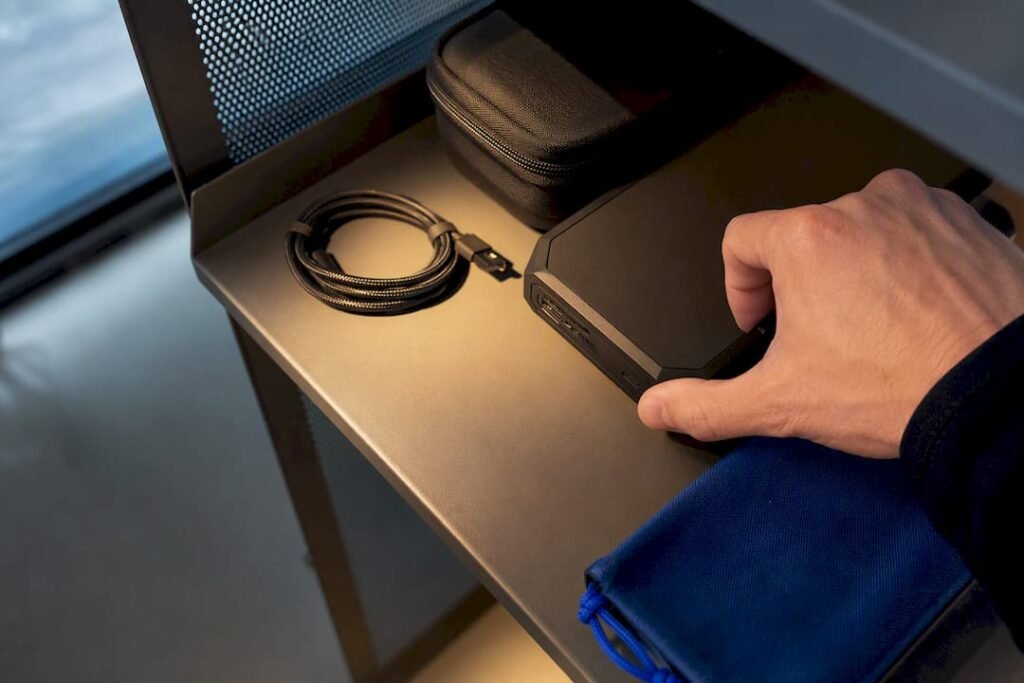
Most power banks last 2 to 4 years, or roughly 300 to 500 full charge cycles, before capacity drops enough to notice. The single biggest thing that shortens that number is heat, followed closely by leaving the bank fully charged in storage. Keep it cool and store it around 50% charge, and you can push well past the low end of that range.
TL;DR:
- Power banks typically last 2 to 4 years or 300 to 500 full charge cycles, with heat accelerating capacity loss significantly.
- Storing a power bank at 50% charge in moderate temperatures can extend its lifespan well beyond the lower cycle estimate.
- Larger-capacity power banks tend to age more slowly in daily use because they require fewer full cycles for the same energy output.
- Using high-quality chargers and avoiding simultaneous charging and discharging can help preserve battery health over time.
- Replace a power bank immediately if signs of swelling, overheating, quick self-discharge, or severe capacity reduction appear.
Table of Contents
- What determines power bank lifespan: cycles, aging, and real output
- What actually shortens a power bank’s life
- Lithium-ion vs. LiFePO4: does chemistry change how long it lasts?
- How to store and charge a power bank to make it last longer
- When should you replace a power bank?
- Why Ifory built for durability, not just capacity
- Built for the outdoors, built to outlast the trip
- Where to go for deeper testing and safety data
- Sources
What determines power bank lifespan: cycles, aging, and real output
Two clocks run on every power bank at once, and they rarely agree.
One is the cycle count, meaning how many full charge and discharge cycles the internal cells have absorbed. A cycle doesn’t require draining to zero and back to 100% in one shot. The other clock is calendar aging, the slow chemical decline that happens whether you use the battery or not, driven mostly by heat and time spent at high charge levels.
The number stamped on the box is also not the number you actually get. Bench testing consistently shows power banks deliver about 80 to 90% of their labeled mAh once you account for voltage conversion losses inside the unit. That means:
- A 10,000mAh power bank realistically delivers around 2 full smartphone charges, not the 2.5 to 3 the label seems to promise.
- A 20,000mAh bank delivers closer to 4 charges.
- A 40,000mAh unit can cover a phone for multiple days, or keep a camera and a headlamp running on a weekend trip without a recharge.
How those numbers translate into years depends on how hard you lean on the device. Someone charging a phone daily might burn through 300 to 500 cycles in 2 to 4 years. A weekend camper who charges a bank a dozen times a year could stretch the same cell chemistry past 8 years, since calendar aging, not cycle count, becomes the limiting factor at that usage rate.
What actually shortens a power bank’s life
Heat is the single biggest accelerant of capacity loss, and it isn’t close. Storing a lithium cell at high temperature while also holding it at a high state of charge can strip away usable capacity within months rather than years, according to bench data on temperature and storage effects. A power bank left on a car dashboard in summer is aging faster in a single afternoon than one sitting in a cool drawer for a month.
By the numbers: Storing a power bank at 100% charge in warm conditions can measurably cut its usable lifespan within months, while keeping it near 50% state of charge in moderate temperatures preserves capacity far longer, per maintenance testing data.
Beyond heat, a handful of specific habits do most of the damage:
- Full 0 to 100% cycles, repeated often, stress the electrodes more than shallow, partial cycles covering the same total energy.
- Fast charging combined with simultaneous discharge (charging the bank while it’s also feeding a device) raises internal temperature, which compounds the heat problem above.
- Long-term storage at either extreme, fully charged or fully drained, pushes the cell chemistry into a less stable state.
- Cheap or mismatched chargers that don’t communicate properly with the power bank’s charging circuit can cause voltage spikes that add wear over time.
One detail that surprises people: larger-capacity banks often age more slowly for the same daily energy need, simply because they need fewer full cycles to deliver the same amount of power. A 40,000mAh bank covering a phone’s daily charge uses a smaller fraction of its total capacity per session than a 10,000mAh bank doing the same job, so it accumulates cycle wear more slowly.
Lithium-ion vs. LiFePO4: does chemistry change how long it lasts?
Most power banks use standard lithium-ion cells, prized for high energy density in a compact size. LiFePO4 (lithium iron phosphate) trades some of that density for a meaningfully longer cycle life and better thermal stability.
- Lithium-ion: typically rated for 300 to 500 cycles, lighter and more compact for a given capacity, the default choice for most compact and high-capacity power banks.
- LiFePO4: often rated for 2,000+ cycles and tolerates heat with less capacity loss, but the cells are heavier and bulkier for the same mAh rating.
- Practical trade-off: LiFePO4 makes sense in larger, less portable power stations where weight matters less than long-term durability. For a pocketable or backpack-friendly power bank, standard lithium-ion remains the practical choice, provided you follow the storage and charging habits below.
How to store and charge a power bank to make it last longer
Small habits compound. None of these take real effort, and together they can be the difference between a power bank dying in 18 months and one still holding a solid charge after 4 years.
- Check stored units every 2 to 3 months. Self-discharge happens even in storage. A quick top-up prevents the cell from drifting into a deep, damaging discharge.
- Recharge around 20%, stop around 80% for daily use. Occasional full charges won’t hurt, but making 0 to 100% your everyday routine adds unnecessary cycle wear.
- Keep it between roughly 15 and 25°C. Never leave a power bank in a hot car, on a sunny windowsill, or buried in direct sun at the beach. Cold isn’t ideal either, but heat does the real damage.
- Use a quality charger. A charger that properly supports PD or PPS fast-charging standards communicates correctly with the power bank’s circuitry, avoiding the voltage irregularities that cheaper chargers can introduce. Readers still sorting out PD versus QC standards will find the distinction matters more than most people assume.
- Never charge and discharge simultaneously if you can avoid it. Feeding a device off the bank while it’s plugged into a wall charger keeps internal temperatures elevated longer than either action alone.
Pro Tip: If you don’t have a way to measure delivered watt-hours or internal resistance, watch for practical proxies instead: charges taking noticeably longer than they used to, or a power bank that’s suddenly good for fewer device charges per full cycle. Both are early signs of aging cells before anything looks visibly wrong.
When should you replace a power bank?
Retire a power bank the moment you notice swelling (a case that no longer sits flat, or edges that bulge), persistent overheating during normal use, fast self-discharge (losing charge sitting untouched for a few days), or a capacity drop to roughly 60 to 80% of its original rating.
- Check the manufacturer’s website for open recalls tied to your model and serial number. Documented recalls affecting aging lithium-ion power banks are rare, but real, and lithium battery fires are notoriously hard to put out once started.
- If your unit is recalled, stop using it immediately and follow the manufacturer’s specific return or disposal instructions.
- Never toss a swollen or damaged battery in household trash. Take it to a certified e-waste or battery recycling program, per product safety guidance on lithium battery disposal.
Why Ifory built for durability, not just capacity
A 40,000mAh capacity means fewer full cycles for the same daily energy draw, which slows calendar aging. The IP67 rating and anti-drop structure protect against the field conditions, not just heat, that shorten a lesser bank’s life. The LED display lets you monitor charge level in real time, which makes it easier to avoid the 100% storage habit that accelerates decay…
— Mats
Built for the outdoors, built to outlast the trip
If you’re the kind of person who charges a phone, a headlamp, and a camera off one device on a multi-day trip, capacity and ruggedness matter more than a sleek shape. Ifory’s 40,000mAh 100W power bank is built around exactly that use case, with an IP67 rating and drop protection designed to survive the conditions that kill cheaper units early.

The multi-port setup and built-in flashlight mean one device covers charging and emergency lighting, which matters when you’re trying to minimize what you carry and what you have to babysit for battery health. Before you buy any power bank, it’s worth reading through Ifory’s safety guidance on recall checks and safe use. Browse the full power bank lineup or go straight to the emergency power bank with flashlight if rugged, long-life performance is what you’re shopping for.
Where to go for deeper testing and safety data
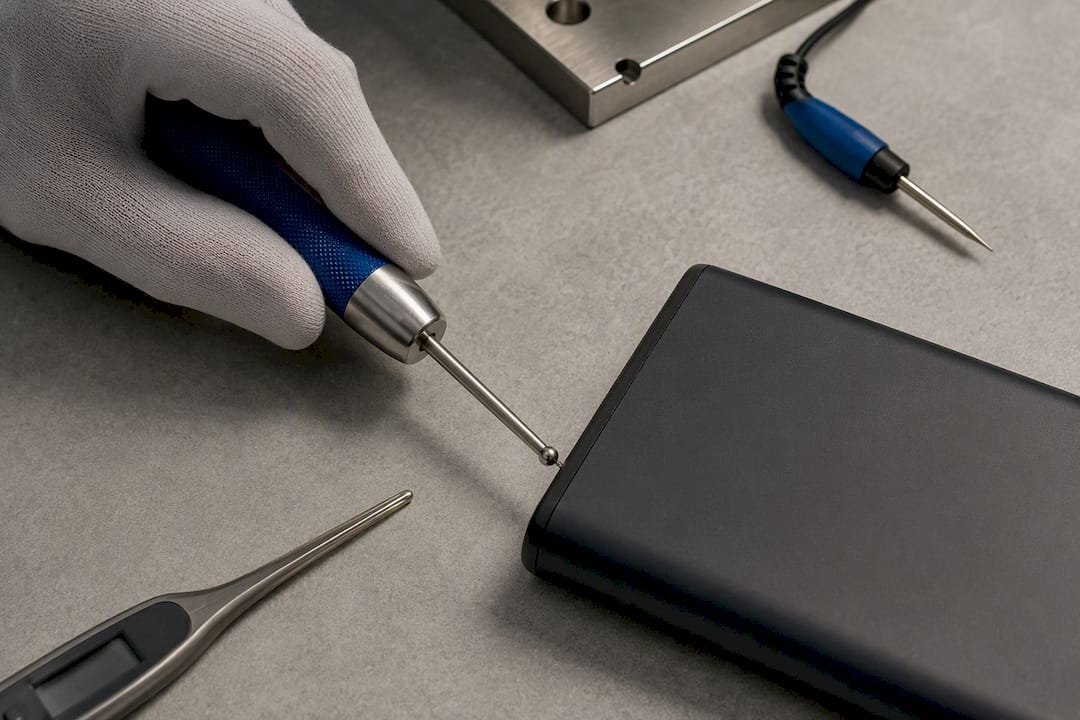
For bench-tested cycle life and delivered capacity figures, see this engineer-tested lifespan breakdown. For recall history and disposal steps, check The Verge’s safety and disposal guide and always confirm current recalls on the manufacturer’s own safety page.
Sources
- How Long Do Power Banks Last? Engineer-Tested (2026)
- How to safely maintain, use, and dispose of your power banks | The Verge
- Power banks guide | ACCC / Product Safety