
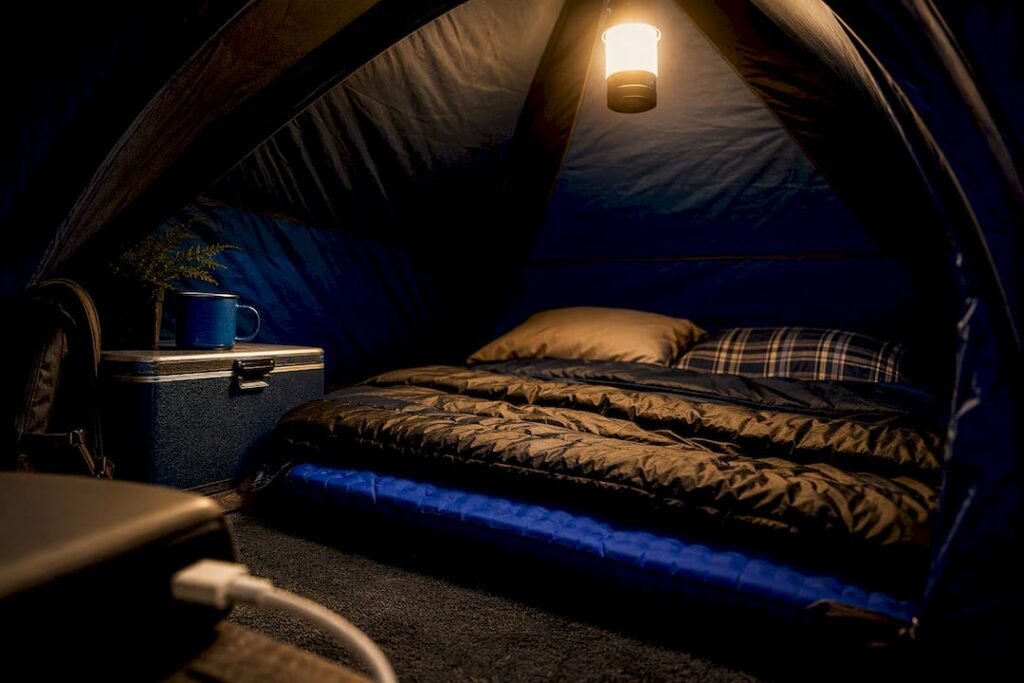
The smartest setup pairs a rechargeable LED lantern with a high-capacity power bank that has its own dedicated lamp circuit, so a dead phone charge never means a dark tent. For campers who want both jobs handled by one rugged device, Ifory’s lineup fits the brief: 40,000mAh of capacity, 100W USB-C PD output, an IP67 shell, and a built-in flashlight that runs independently of your device charging.
TL;DR:
- A 40,000mAh power bank with 100W USB-C PD can reliably charge multiple devices and power independent lights throughout several days of camping.
- For overnight trips, a lantern with 100 to 200 lumens and a capacity of up to 6,000mAh suffices for lighting and device topping-off.
- Durability features like IP67 ratings and rugged housings are essential to withstand rain, drops, and rough handling during camping.
- Using overhead placement for lanterns and running them at lower brightness levels can significantly extend runtime in the field.
- Adding a solar panel to a high-capacity power bank improves off-grid recharging when trips extend beyond three days.
Table of Contents
- What to Look for in a Tent Lighting Power Bank
- How Much Capacity and Brightness Do You Actually Need?
- Setting Up Your Tent Lighting and Charging System
- Why Ifory’s Design Handles These Trade-Offs Better
- How to Choose the Right Ifory Setup Before You Checkout
- Sources
What to Look for in a Tent Lighting Power Bank
Not every “lantern with a power bank” is built the same way, and the spec sheet tells you more than the marketing photos do. Start with brightness. Most tent interiors only need 100 to 300 lumens for reading or setting up camp, while anything above 500 lumens is really task lighting for cooking or gear repair after dark. Color temperature matters just as much as lumen count. Warm light in the 1800K to 3500K range feels cozy in a small tent and cuts down on glare, while cooler 5000K+ light is better suited to outdoor tasks where you need to see clearly at a distance.
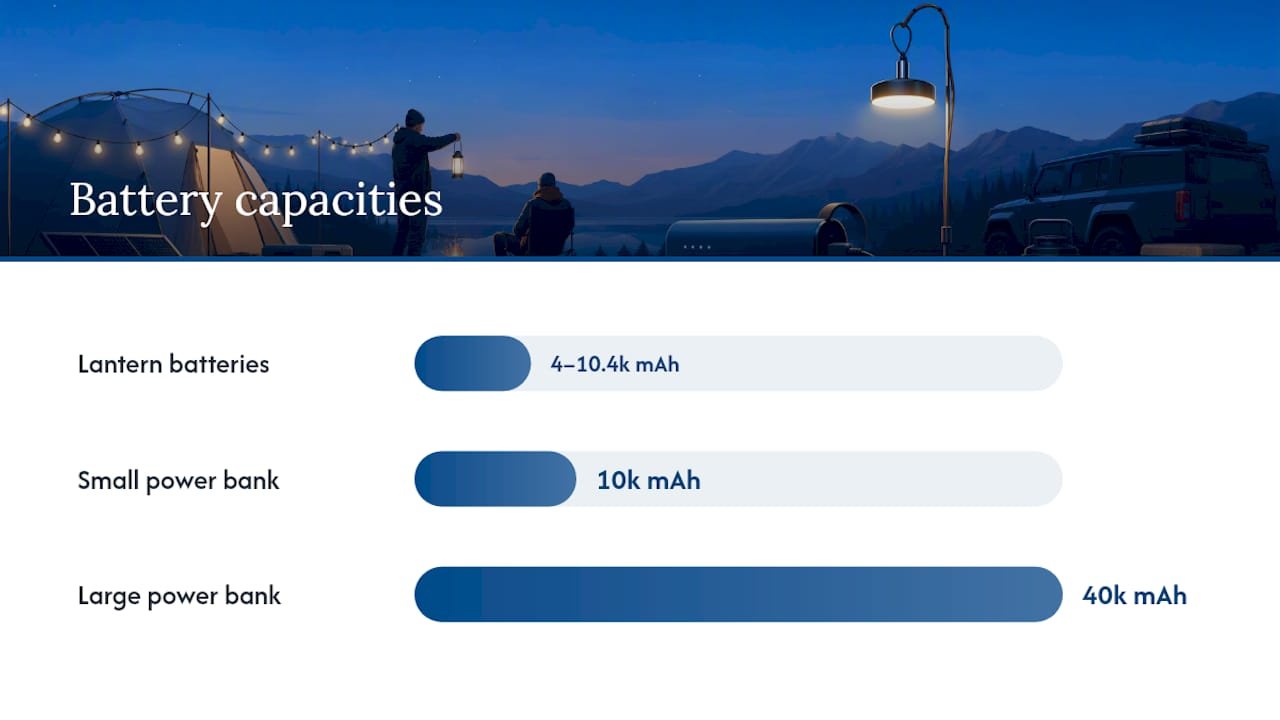
Battery capacity should be translated into something you can actually picture. A 10,000mAh power bank gives you roughly two full phone charges, while a 40,000mAh unit can cover a phone, a tablet, and a headlamp across several days without a recharge. Tested buyer guides show internal lantern batteries commonly run 4,000 to 10,400 mAh, with brighter 500 to 800 lumen basecamp lanterns burning through that capacity faster than ultralight, lower output models.
Pro Tip: Check whether the lamp draws from the same battery as your phone charging port. If it does, running the light all night can leave you without enough juice to top off a phone in the morning.
- Ports and output: Look for USB-C PD in the 18 to 100W range, plus simultaneous multi-device charging so you’re not queuing devices overnight.
- Battery architecture: An independent lamp battery keeps the tent lit even while the main bank is feeding a phone or GPS unit, which some manufacturers call out as a deliberate design advantage.
- Ingress protection: IP67 handles rain and accidental dunks; IP54 is fine for dust and light splashes but not a river crossing.
- Weight: Backpackers should prioritize grams per lumen; car campers can afford the extra ounces that come with a 40,000mAh bank.
- Recharge inputs: USB wall charging, car adapters, and solar panels all matter differently depending on trip length.
How Much Capacity and Brightness Do You Actually Need?
Sizing this right comes down to trip type, not brand loyalty. Here’s a rough framework that holds up across most camping styles:
- Lightweight overnight backpacking: A 4,000 to 6,000 mAh lantern battery and 100 to 200 lumens covers one night of reading light plus a single phone top-up. Gear testers note lanterns in this range typically deliver at least one full phone charge.
- Car camping with a family: Aim for a 20,000 to 40,000 mAh bank and a lantern capable of 300 to 500 lumens on demand. This covers multiple phones, a tablet for the kids, and several nights of ambient lighting.
- Multi-day off-grid trips: A 40,000mAh bank paired with a dedicated lantern and a solar panel is the safest bet. Weight becomes secondary to reliability once you’re three days from a wall outlet.
Run the math before you leave: a 40,000mAh bank at roughly 0.6 to 0.7 usable efficiency still delivers multiple full phone charges compared to a single top-up from a 6,400mAh lantern battery. Backpackers should lean toward the lightest gear that meets their needs, while car campers can reasonably size up, since weight matters far less once you’re not carrying it on your back. If your trip runs longer than three days, pair your bank with a 40W solar panel rather than relying on the battery alone.
Setting Up Your Tent Lighting and Charging System
Hang your lantern from the tent’s ceiling loop or ridge line rather than setting it on the floor. Overhead placement spreads light evenly and avoids the harsh shadows you get from a single low-angle source. If your lantern has a diffuser or frosted cover, use it. Bare LED bulbs throw a lot of glare in a space that small.
Manage your power like you would ration food on a long hike. Run the lantern on its lowest usable brightness overnight, since even a modest jump from 50 to 150 lumens can cut your runtime dramatically according to tested lantern comparisons. Stagger your device charging rather than plugging in everything at once, and check the LED state-of-charge display before you turn in for the night so you’re not guessing at 2 a.m.
Test your full setup at home before the trip. Run the lantern at a realistic campsite brightness, not the minimal output most “hours of runtime” specs are measured at, so you know what to actually expect in the field.
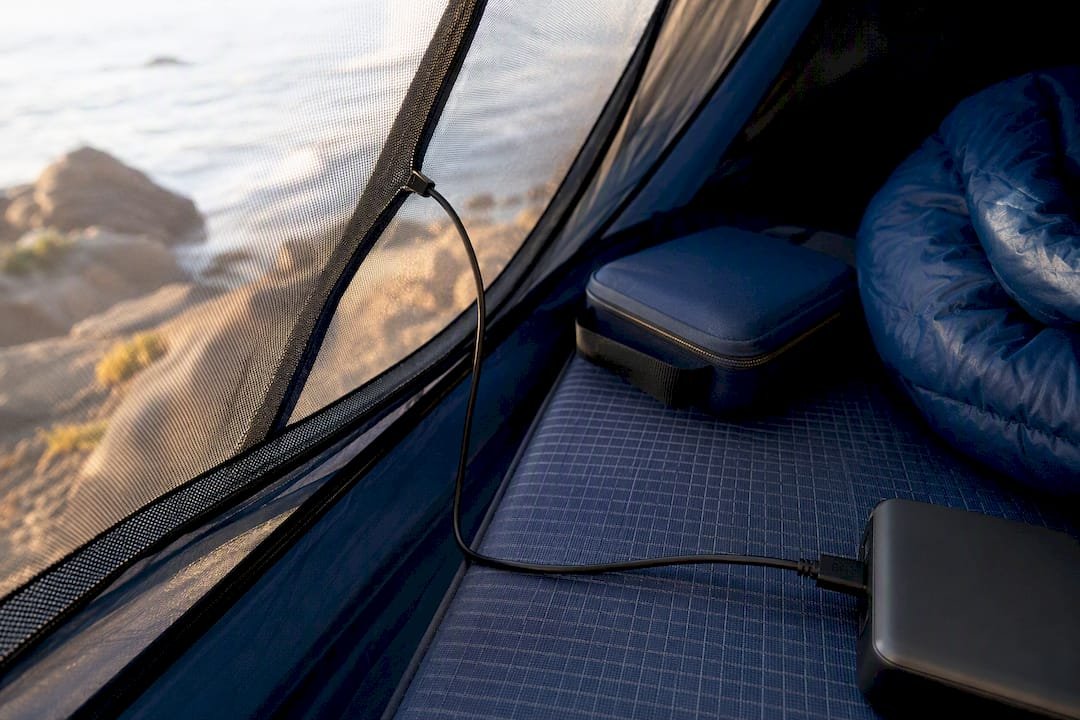
Watch your ventilation. Charging cables and battery packs generate heat, so avoid burying them under a sleeping bag or tucking them into a sealed dry bag overnight. Keep cable routing away from tent zippers and mesh panels where moisture tends to collect, and store your power bank somewhere it won’t get crushed by gear during the day.
Why Ifory’s Design Handles These Trade-Offs Better
Most of the compromises campers run into with tent lighting power banks come down to one thing: manufacturers force you to choose between brightness, battery life, and durability. Ifory’s 40,000mAh unit sidesteps that by pairing high capacity with 100W USB-C PD, which means you can fast-charge a phone, tablet, and camera battery across a multi-day trip without babysitting the charge order.
The IP67 rating and anti-drop housing solve the durability half of the equation. Camping gear gets dropped, rained on, and packed into wet dry bags, and a power bank that can’t survive that isn’t worth carrying. Ifory’s built-in 500-lumen flashlight runs as a genuine backup light source, which matters most in an actual emergency when you need illumination that doesn’t depend on your phone having charge left. The LED display gives you a real-time read on remaining capacity instead of the four-dot guesswork most banks offer, and the waterproof housing means a sudden downpour doesn’t end your trip early.
— Mats
How to Choose the Right Ifory Setup Before You Checkout
If you’re camping solo or doing weekend trips, the 40,000mAh 100W Ifory power bank covers your phone, headlamp, and a backup light source in one compact unit. Family car campers running multiple devices should look at the same core unit but plan to add the 40W portable solar panel if trips run past three days, since a sunny day of panel exposure realistically tops off a meaningful chunk of a 40,000mAh battery rather than a full recharge.
Before you buy, check three things: the IP rating matches your actual use case (IP67 for river trips and rain, not just splash resistance), the warranty terms cover battery degradation over time, and the return window gives you room to test runtime in the field. Ifory backs its power banks with manufacturer support and a straightforward return policy, so you’re not stuck with a unit that doesn’t match your trip style. If you’re not sure which model fits, the full power bank lineup breaks down capacity and features side by side, and campers looking for extra ambient lighting ideas can browse creative campsite lighting setups for inspiration beyond the lantern itself. Pick your capacity, check your IP rating, and add the solar panel if you’re heading off-grid for more than a couple of nights.
Sources
- REI — Best camping lanterns (tested)
- GearJunkie — The 13 best camping lanterns (2026)
- Unixpow — power bank with camping light (independent LED battery explanation)