
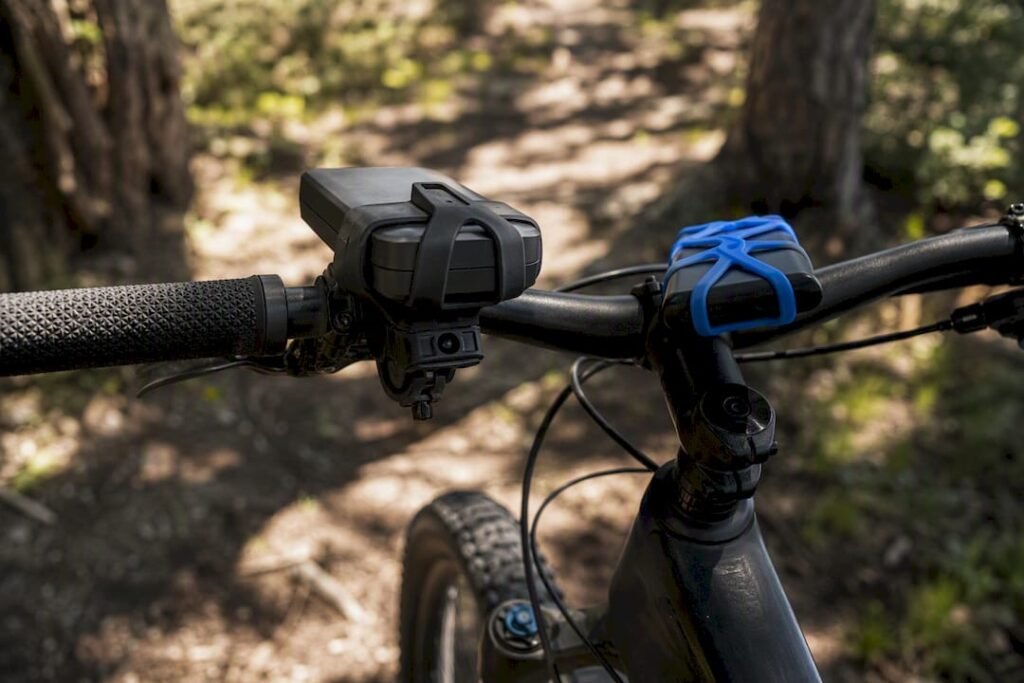
For most riders, an integrated bayonet mount like the SKS Compit+/Power delivers the steadiest cockpit setup, while a universal silicone-strap holder like Rider Power gives you flexibility to run whatever power bank you already own. If you’re touring or riding remote routes where battery life matters more than a sleek cockpit, pair either mount style with a high-capacity unit like the Ifory 40000mAh 100W, carried in a holster rather than strapped bare to the bar.
TL;DR:
- Handlebar diameters vary from 22.2mm to 35mm, so precise measurement is essential to avoid a loose or wobbly mount.
- Mounting capacity should match your riding style, with 5,000 to 10,000mAh sufficient for daily commuting and larger batteries recommended for touring.
- Wired cables around 12 to 15 centimeters reduce strain and port failure risk, especially on rough terrain or for larger power banks.
- High-capacity power banks like the Ifory 40000mAh should be secured in holsters or frame bags, not directly clipped to the handlebar for safety and weight distribution.
- Choosing between integrated systems and universal straps depends on whether you prioritize cockpit neatness or battery flexibility, with specific mount sizes needed for your handlebar.
Table of Contents
- What Is the Best Handlebar Power Bank Mount for Your Bike?
- How Do You Choose the Right Mount and Capacity for Your Bike?
- How Do You Install and Route Cables So Nothing Rattles Loose?
- Where Does Ifory Fit Into a Handlebar Charging Setup?
- Where Can You Buy Ifory Power Banks and Compatible Mounts?
- What’s the Right Setup for Your Riding Style?
- Sources
What Is the Best Handlebar Power Bank Mount for Your Bike?
Two mounting philosophies dominate the market, and picking between them is really a question of what you value more: cockpit cleanliness or freedom to swap batteries.
Integrated systems bolt or clamp onto the bar and dock a matching power bank through a bayonet or twist connection. The SKS Compit+/Power is the clearest example. It lists compatible handlebar diameters of 22.2mm, 25.4mm, 31.8mm, and 35mm, and its docking system is built for stability on rough terrain rather than convenience of swapping. The trade-off is you’re locked into that brand’s power bank and adapter ecosystem.
Universal strap holders use elastic silicone bands to grip whatever phone or power bank you hand them. Rider Power from Cellularline holds phones up to 6.7 inches and power banks up to roughly 13 by 17 centimeters, which covers most mid-size battery packs on the market. Riders gravitate toward this format for one simple reason: they’d rather use the power bank they already own than buy into a proprietary charging ecosystem.
The featured lineup below covers both approaches plus a few practical middle grounds.
A few things stand out once you line these up side by side:
- Ifory works best when treated as touring power, not a bar accessory. Mount it in a holster near the stem or frame, not clipped bare to the bar.
- SKS COMPIT+/Power is the strongest pick if you’re pairing with a Bosch or similar e-bike display and want the powerbank to disappear into the cockpit.
- Rider Power wins on flexibility and price at €16.99, but it sacrifices the locked-in feel of a bayonet system.
- POWER MOUNT max fits banks like the Intenso Powerbank XS10000 into a compartment measuring roughly 93 by 65 by 25 millimeters, advertised as weatherproof and vibration resistant.
- Cycl’s compact unit is the lightest option here, built for commuters who prefer minimal weight impact on their bars.
How Do You Choose the Right Mount and Capacity for Your Bike?
Start with a tape measure, not a shopping cart. Handlebar mounts are sized to specific diameters, and getting this wrong means a wobbly setup or a return shipment.
- Measure your bar and stem clamp area. Common diameters are 22.2mm (older road/city bars), 25.4mm, 31.8mm (most modern road and mountain bikes), and 35mm (increasingly common on gravel and enduro bikes).
- Check clearance around your e-bike display. If you’re running a Bosch Intuvia, Nyon, or similar center unit, measure the display plus its bracket before assuming a mount will fit beside it.
- Match capacity to riding style. Commuters do fine with 5,000 to 10,000 mAh. Touring or emergency use justifies going bigger, but anything above 10,000 mAh belongs off the bar in a frame bag or backpack mount, not clipped to your steering.
- Decide between wired and inductive charging. Wired is simpler and cheaper. Inductive, offered on the SKS Compit+/Power set, skips the cable entirely but costs more and locks you into that ecosystem.
- Run through a pre-purchase checklist: IP rating, mounting method (bayonet, clamp, or strap), and whether spacers or diameter adapters are included in the box.
Pro Tip: If your power bank exceeds 10,000 mAh, mount it off the handlebar entirely. A frame bag or backpack keeps the weight off your steering and avoids the leverage that causes ports to loosen over thousands of vibration cycles.
Wired setups also win on cable length. A shorter cable, somewhere around 12 to 15 centimeters, keeps less slack flapping around and reduces strain on the charging port when the bike hits a pothole.
How Do You Install and Route Cables So Nothing Rattles Loose?
Getting the mount tight is only half the job. The other half is making sure vibration doesn’t work everything loose over a few hundred miles.
- Check spacers and O-rings before your first ride. Most bayonet and clamp systems ship with rubber inserts that need to seat fully, or the mount will develop play within a week.
- Route cables so they run parallel to the bar, anchored at two points, not just plugged in and left to dangle.
- Add a small zip-tie or adhesive cable clip near the connector. This removes leverage on the port itself, which is where most charging cable failures start.
- Test the whole setup at walking pace before committing to a real ride. Wiggle the bars hard. If anything shifts, tighten it before you’re on gravel at 20 mph.
Practitioner guidance generally lands on the same number: a cable length of roughly 12 to 15 centimeters is the sweet spot for reducing port stress without creating a cramped connection. Anything longer just gives vibration more rope to work with.
As for weight, most riders top out comfortably around 10,000 mAh directly on the bar. Beyond that, the extra mass changes how the bike responds at low speed, especially on loaded touring setups.
Where Does Ifory Fit Into a Handlebar Charging Setup?
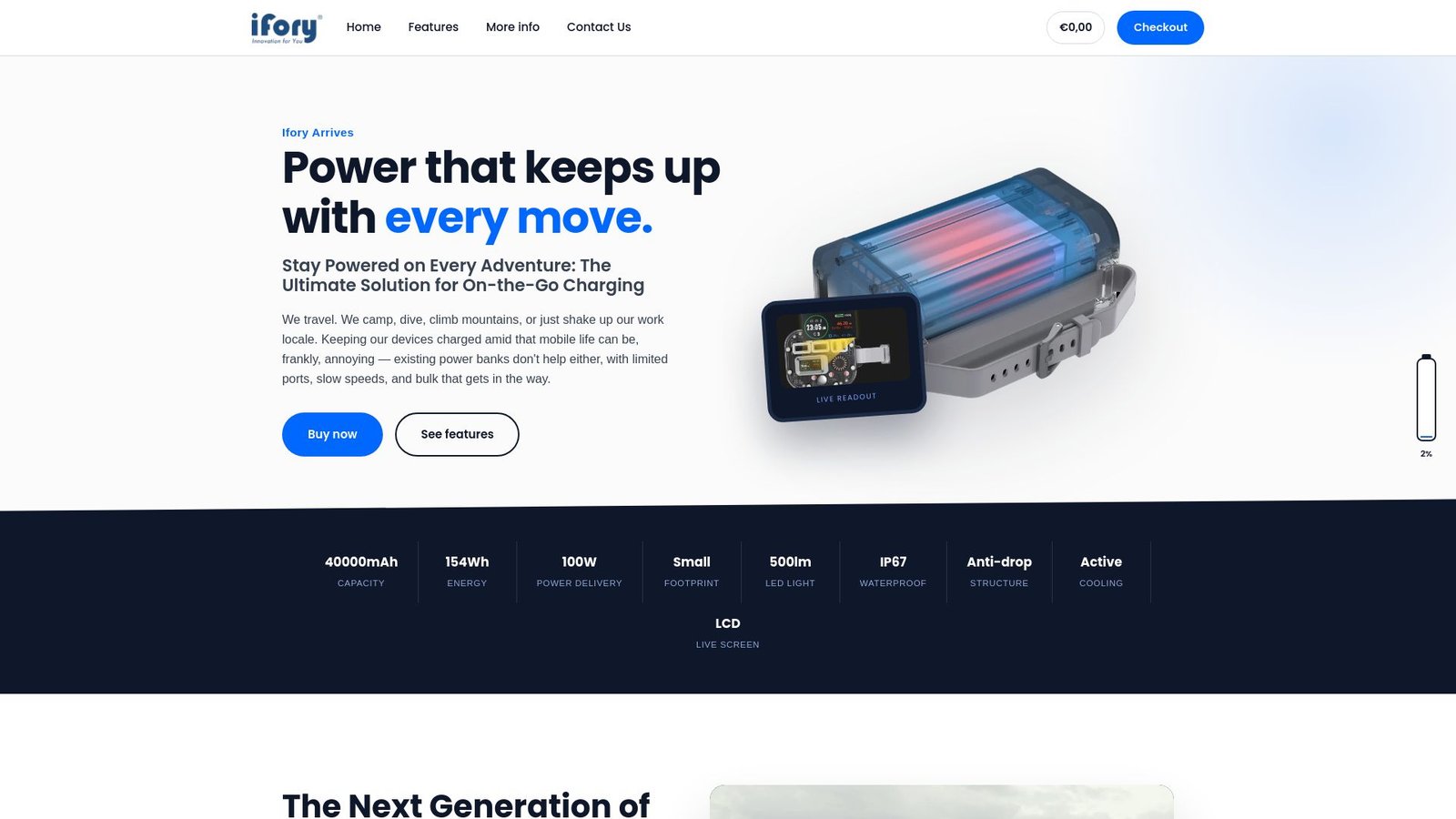
The Ifory 40000mAh 100W isn’t built to clip onto a strap mount. At that capacity, with IP67 waterproofing, anti-drop protection, a real-time LED display, and a built-in flashlight, it’s a touring and emergency-backup tool first. That’s exactly why it belongs in a stem-mounted holster or frame bag rather than dangling off your bars in a silicone strap rated for something a fraction of its size.
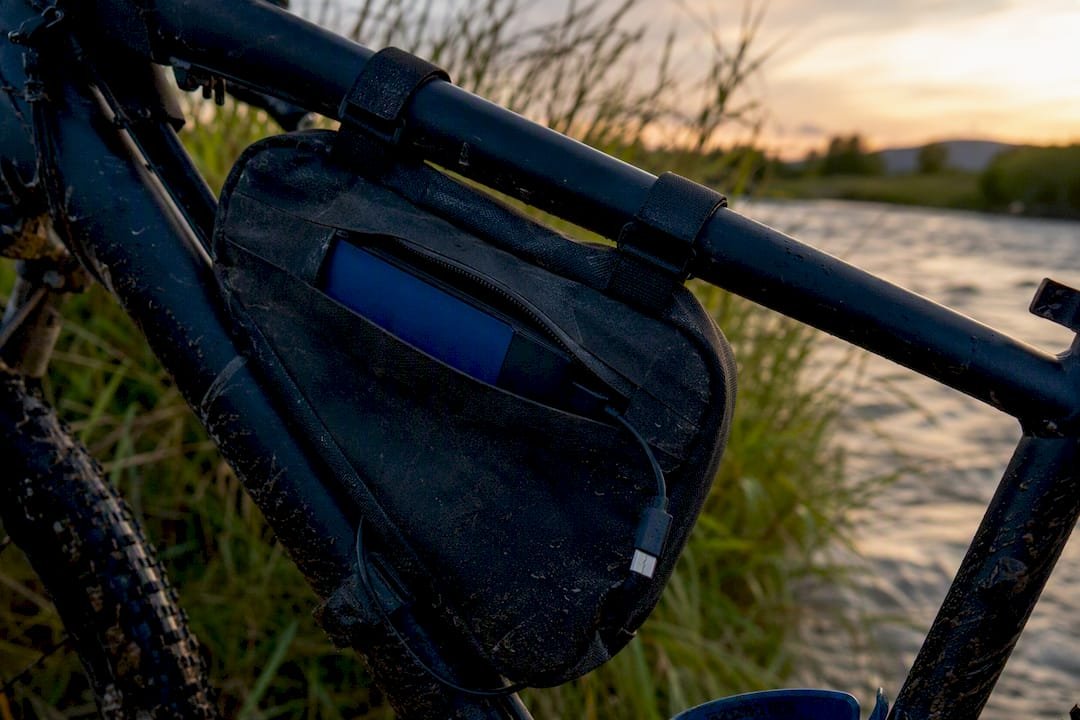
Riders who want that much power on a handlebar setup should pair it with a rigid holster mount, run a short charging cable (12 to 15 cm), and test steering feel at low speed before hitting rough terrain. Treat it as your reserve tank for multi-day rides or off-grid stretches, not your everyday commuter accessory.
Where Can You Buy Ifory Power Banks and Compatible Mounts?
Once you’ve settled on a mount style, matching it to the right power bank is the last step. Ifory’s 40,000 mAh 100W model is built for exactly the touring and emergency-backup scenarios where handlebar-adjacent charging matters most, and its IP67 rating means a sudden downpour won’t end your ride early.
Before you buy, run this quick checklist: confirm your holster or mount type accepts a bank this size, measure your bar or stem clearance, and keep your charging cable in that 12 to 15 centimeter range to avoid port stress. If you want a rugged, waterproof option built specifically for outdoor use, browse the full powerbank lineup or check the emergency power bank with flashlight for a model that pairs flashlight utility with the same anti-drop construction. Pick your mount, measure twice, and order the bank that actually fits your ride.
What’s the Right Setup for Your Riding Style?
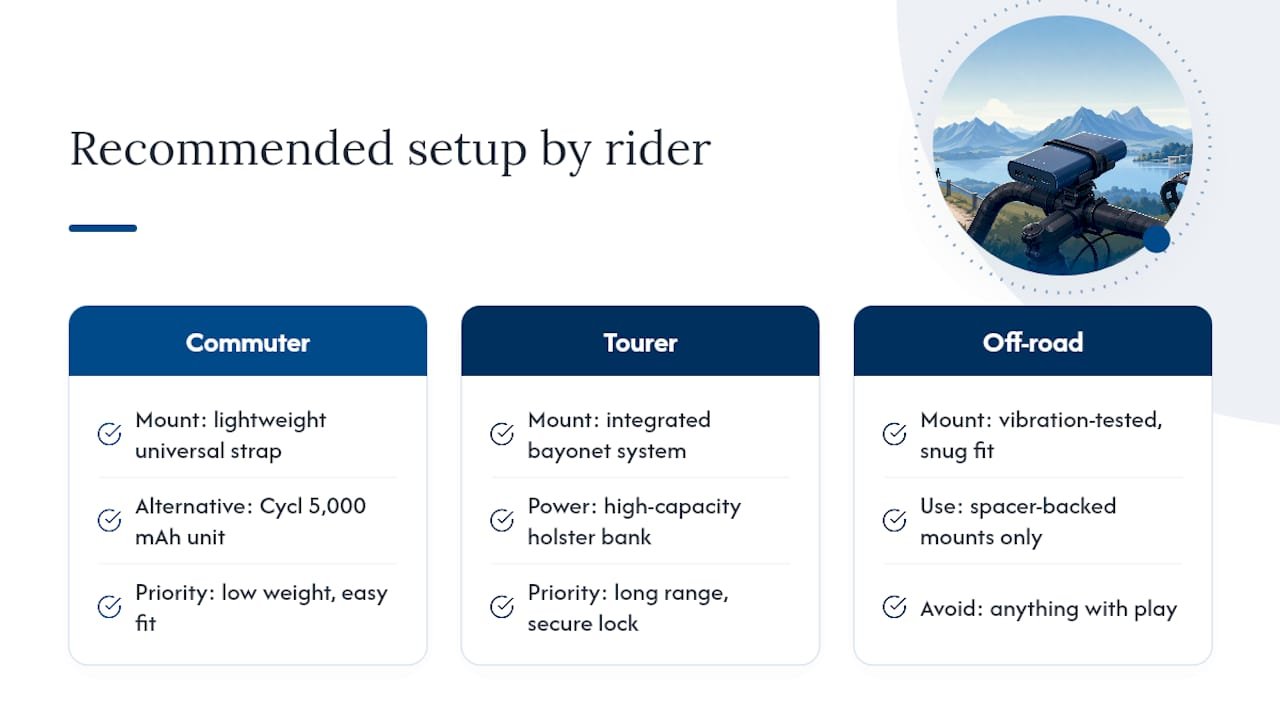
Commuters should lean toward a lightweight universal strap or the Cycl 5,000 mAh unit. Tourers and long-distance riders get more value from an integrated bayonet system paired with a high-capacity holster bank. Off-road riders need vibration-tested mounts and should skip anything without a snug, spacer-backed fit.
Two things to check before every ride: confirm the mount hasn’t developed play since your last outing, and make sure your cable routing has no exposed slack near moving parts.
If you want to see how Ifory tests its waterproofing and drop resistance, the Ifory blog covers the specifics, and their support team can answer fit questions for your particular bike setup.
— Mats