
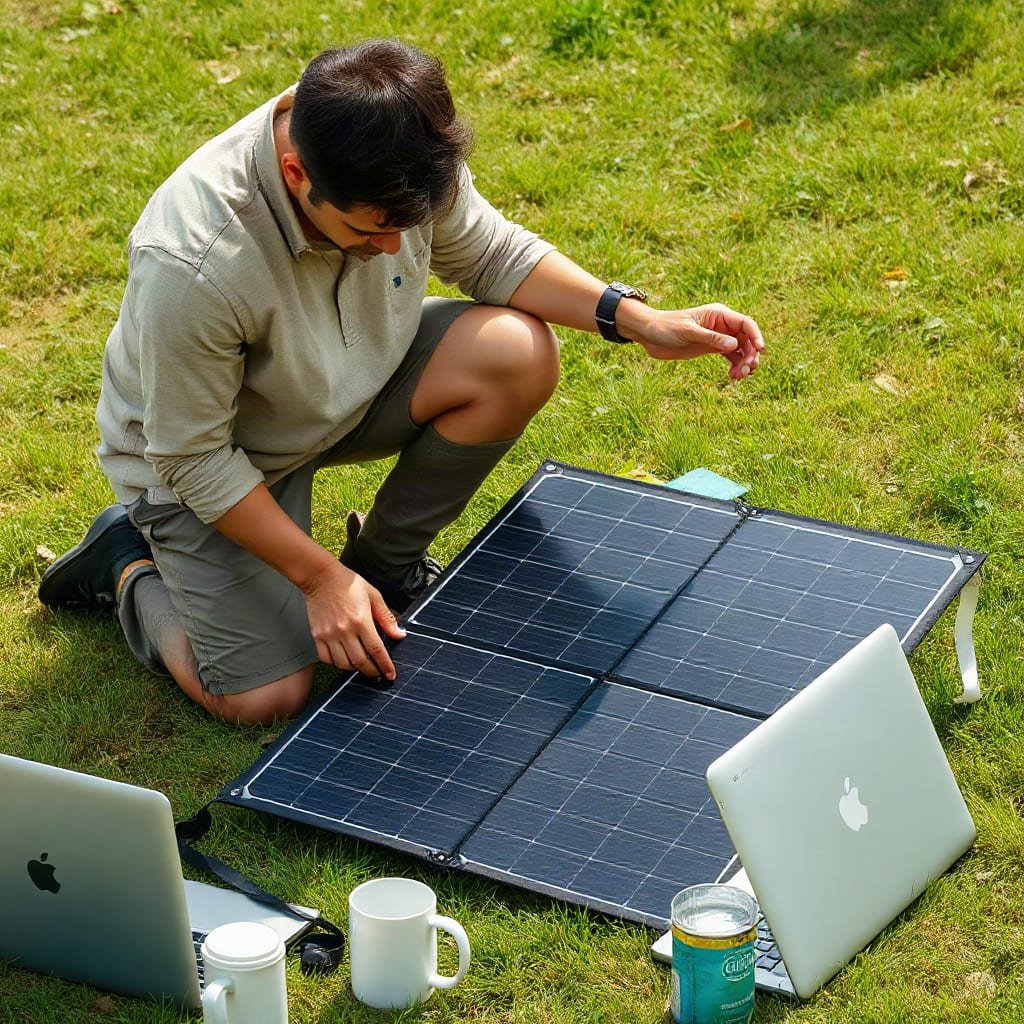
A solar power phone charge can keep mobile devices running off-grid, but solar panels do not send power straight into your phone. To charge a phone from a solar panel, use a high-capacity power bank to capture the variable energy, store it, and convert it to a steady 5V or 9V output over USB Power Delivery. Setup efficiency depends on sunlight intensity and battery storage capacity.
TL;DR:
- Solar charging depends on how intense and how long sunlight lasts.
- For best results, pair a 100W power bank with a dedicated solar panel.
- Charging speed depends on the power bank's capacity, the panel's wattage and the sunlight.
- A full phone charge takes much longer from solar than from a wall outlet.
- Tablets and laptops need more wattage (60W+) to charge outdoors.
Table of Contents
- Understanding Solar Power for Mobile Charging
- The Reality of Solar Power Phone Charging Times
- Is There a Dedicated Solar Phone Charger Solution?
- Why Battery Life Is More Important Than Panel Size
- The Downsides of Off-Grid Charging
- Choosing the Right Solar Power Phone Charge Setup
- Maximizing Your Solar Charging Experience
- Get a Rugged, High-Capacity Charging Solution
- Frequently Asked Questions
- Sources
Understanding Solar Power for Mobile Charging
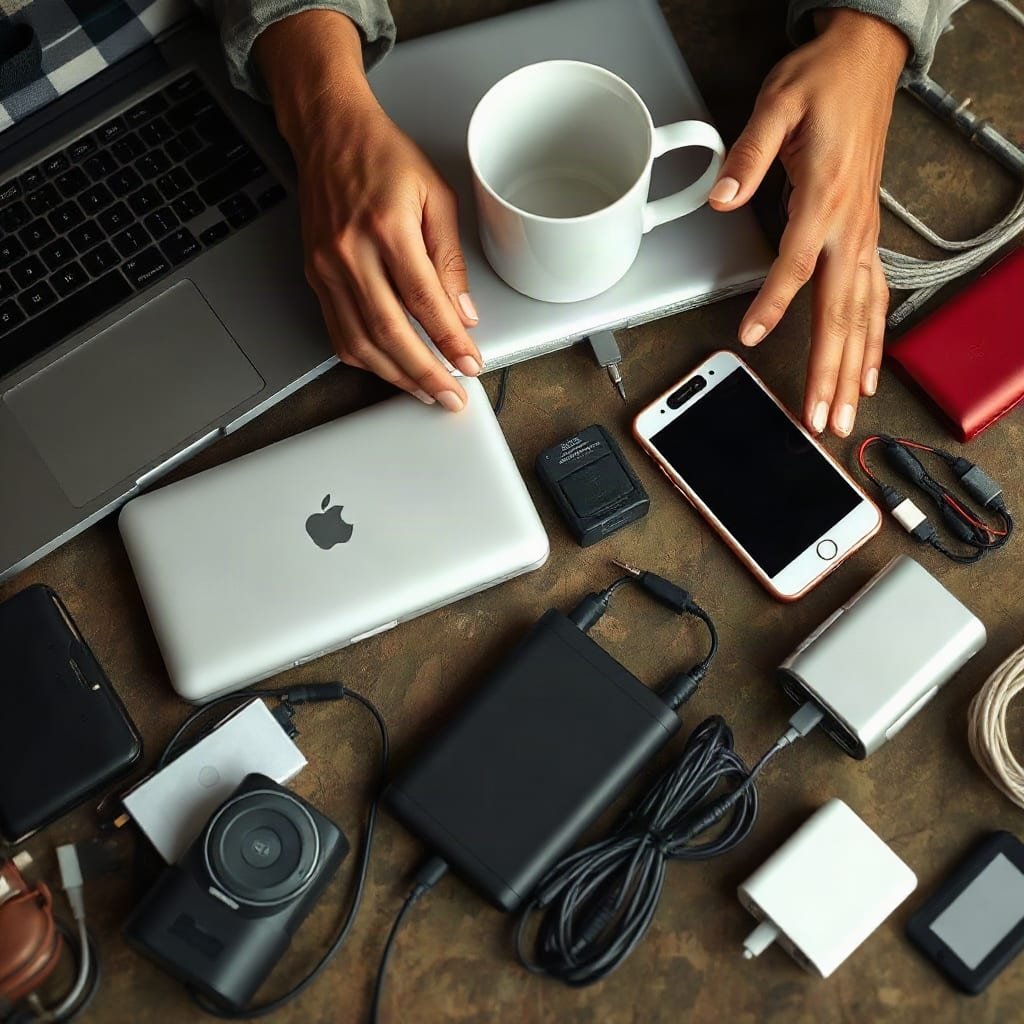
Before buying any equipment, you need to understand how the energy flows. A solar panel converts photons into DC electricity, but that electricity is inconsistent. It surges when you move a panel into direct sunlight and drops to almost zero when a cloud passes.
The power bank acts as the mediator. It takes the volatile solar input and stores it in chemical form. When you plug your phone into the power bank, the bank regulates the energy so your phone receives a steady, safe voltage over the USB Power Delivery (PD) standard.
The Reality of Solar Power Phone Charging Times
How long it takes to charge a phone with a solar panel depends on three main variables: the phone's battery size, the solar panel's rated wattage, and the solar panel's efficiency.
A small 10W panel under perfect conditions could deliver 10 watts of continuous power. If your phone requires 10 watts to charge, an 8000 mAh phone (assuming a 3.7V battery internally, about 29 Wh) might take roughly 2.6 hours of peak sunlight to replenish.
How Light Intensity Impacts Output
Solar energy harvesting follows the inverse square law of light intensity. When a cloud covers 30% of your panel, you might see a 30% drop in output. On average, solar panel performance is calculated using "Peak Sun Hours" (PSH), a localized measure of how long the sun shines at its highest intensity. Expect 3 to 4 PSH in summer and significantly fewer in winter in northern latitudes.
Is There a Dedicated Solar Phone Charger Solution?
Yes, there are integrated solar phone chargers, but many are inefficient and more of a niche for emergency survival than reliable travel power.
Most small all-in-one chargers lack the storage capacity and high-wattage DC-to-AC or DC-to-USB conversion needed for modern devices. For serious off-grid use, Sustainable Energy Australia recommends buying a high-wattage portable solar panel separately from a high-capacity power bank. This separation lets you maximize the output of both components.
Why Battery Life Is More Important Than Panel Size
The size of the solar panel only tells you how much energy you can gather per hour. The capacity of the power bank tells you how much total energy you have stored for use over many hours.
A large panel might produce 40W of power, but if your power bank is a small 5,000mAh unit, that energy is used up in minutes. Conversely, a large 40,000mAh power bank can store hundreds of watt-hours, which a moderate panel can replenish slowly over a full day.
| Device Type | Required Wattage (Average) | Best Practice Charging Method |
|---|---|---|
| Smartphone (iPhone 15) | 5W – 10W | Dedicated 10W-21W solar input to a bank |
| Tablet (iPad 10) | 10W – 20W | 20W+ solar input for faster turnover |
| Laptop (16-inch standard) | 45W – 90W | Dedicated 100W+ power bank and high-output panel |
The Downsides of Off-Grid Charging
The drawbacks to solar power for daily charging are mostly logistical and environmental. You cannot charge your phone while sleeping, and on a cloudy day your phone stays dead no matter how beautiful the panel is.
- Weather Dependence. Output drops sharply during rain or heavy cloud cover, which makes it unreliable for overnight trips.
- Weight and Bulk. A portable solar panel and a large high-capacity power bank add significant weight and take up space in a small backpack.
- Slow Charging Speed. Solar panels work best when they constantly move toward the sun and are oriented perfectly, which is impossible on a stationary trip.
The energy output of most portable solar setups drops significantly when the panel angle deviates from the sun's direct line of sight.
Choosing the Right Solar Power Phone Charge Setup
When selecting a system, prioritize the power bank's input rating and the panel's output rating.
You need a solar panel rated for at least the peak power draw of the power bank. If your power bank can accept a 21.88V/2.19A input (47 Watts), you need a panel that can reach those specifications. If the power bank is lower-rated, the panel cannot deliver its full output.
Pro Tip: Optimize Panel Deployment
For the best results, avoid placing your panel on the ground. Elevate it on a lightweight tripod or mounting stand. This small change lets you track the sun's path through the day and capture the highest wattage during peak hours.
Maximizing Your Solar Charging Experience
To make solar power practical for long-term travel, build a system where storage is as large as your collection capacity.
A common mistake is using a small phone charger (3,000mAh) and a small panel. A smarter approach is a 40,000mAh power bank. That large energy buffer lets you charge slowly during the day and use stored power at night without interruption.
Get a Rugged, High-Capacity Charging Solution
If your primary goal is sustained power for multiple devices away from a wall outlet, look at the high-capacity solutions from Ifory. The Ifory 40,000mAh 100W Power Bank is built to run a full setup of laptops and tablets as well as a phone, using USB Power Delivery. Paired with the companion 40W Portable Solar Panel, it creates a reliable charging setup for extreme conditions. This system addresses inconsistent charging speeds by using the large internal battery buffer to keep output steady even when the sun is only partly shining.
The bundle is currently available for specific promotions on the Ifory website, and it includes free shipping on qualified orders. It comes with a 30-day return policy so you can test its performance in your environment. Check that your specific device (such as a MacBook or an older iPhone) supports USB-C PD, because the power bank's output can only be as good as the device's intake.
Frequently Asked Questions
Can a small 5W solar panel charge a modern iPhone?
Yes, a 5W panel can keep an iPhone charged, but charging is slow unless the panel gets direct, intense sunlight. For a noticeable charge time, look for panels and power banks that handle at least 15 to 20W of input power.
Do I need a special type of USB cable for solar charging?
The power bank handles the conversion, but use a high-quality USB-C to USB-C cable that supports Power Delivery (PD) and is rated for at least 100W. Cheap or old cables can overheat or fail to carry the high wattage needed for fast charging.
How do I know if my solar panel is working properly?
Check the panel's output voltage and amperage with a multimeter if you have one. If you are not technical, plug the panel into a power bank and watch the charging indicators on the bank.
Can solar power charge a Nintendo Switch on the go?
Yes, a Switch draws significant power, especially during demanding games. To reliably power it, use a power bank with at least 45W of output, which usually requires a larger, higher-rated solar panel setup.