
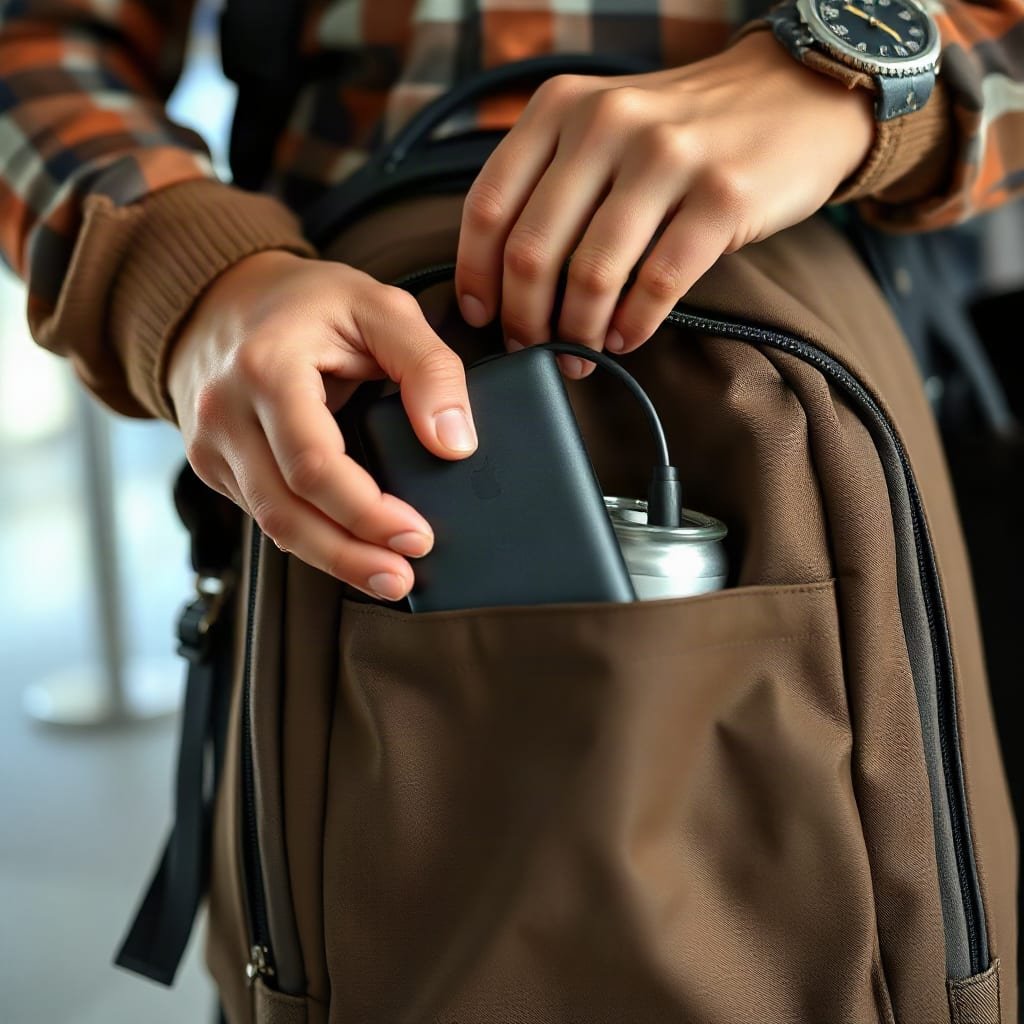
Can you put a power bank in checked luggage? No. Power banks count as spare lithium batteries, and rules built on ICAO and IATA standards, enforced by the TSA, FAA and European airlines alike, require them in your carry-on. The distinction that matters is size: up to 100Wh is routine, 100-160Wh needs airline approval, and anything above 160Wh is banned from passenger planes entirely.
TL;DR:
- Power banks never go in checked luggage. They must stay in your carry-on or on your person, on virtually every airline worldwide.
- Capacity is measured in watt-hours, not mAh: up to 100Wh is fine, 100-160Wh needs airline approval (two max), and over 160Wh is prohibited.
- A 20,000mAh bank is about 74Wh and is fine. A 30,000mAh bank is about 111Wh and needs approval. A 40,000mAh bank is about 148Wh and needs approval too.
- If your carry-on gets gate-checked, take the power bank out first. This is the most common way people break the rule by accident.
- If you realize a power bank is in your checked bag, tell the airline before the bag is loaded. Don't wait for it to be found.
Table of Contents
- Can You Put a Power Bank in Checked Luggage? The Rule and the Reason
- TSA Rules for Power Banks, and Why They Match the Rest of the World
- Do the Wh Math: Is Your Power Bank Under the Line?
- Is a 20000mAh Power Bank Allowed on a Plane? What About 30000mAh?
- Airline Policies: United, American and the "Jet" Carriers
- When the Obvious Answer Is Wrong: Gate-Checks, Laptops and Smart Bags
- You Left a Power Bank in Checked Luggage: What Actually Happens
- Get a 40,000mAh Power Bank That Won't Ground Your Trip
- Frequently Asked Questions
- Sources
Can You Put a Power Bank in Checked Luggage? The Rule and the Reason
You can't. The FAA's PackSafe guidance says spare lithium batteries, a category that includes power banks, must travel in carry-on baggage only. The IATA lithium battery guidance says the same, and it forms the basis of most airline policies worldwide. The rule comes from ICAO's Technical Instructions, which governs how dangerous goods move on aircraft.
The reason is practical rather than bureaucratic:
- No one is watching the hold. A lithium cell that overheats in the cabin gets noticed in seconds. Crew can reach it, and they carry fire containment equipment. In the cargo hold, a thermal runaway can build for a long time before anyone knows.
- Baggage handling is rough. Bags get dropped, stacked and compressed. A crushed or punctured cell is a classic way to start a short circuit.
- Power banks are dense. They pack a lot of stored energy into a small space, so a fault is more severe than in a phone.
That's why the rule is so consistent across airlines. It isn't a preference. It's a baseline.
TSA Rules for Power Banks, and Why They Match the Rest of the World
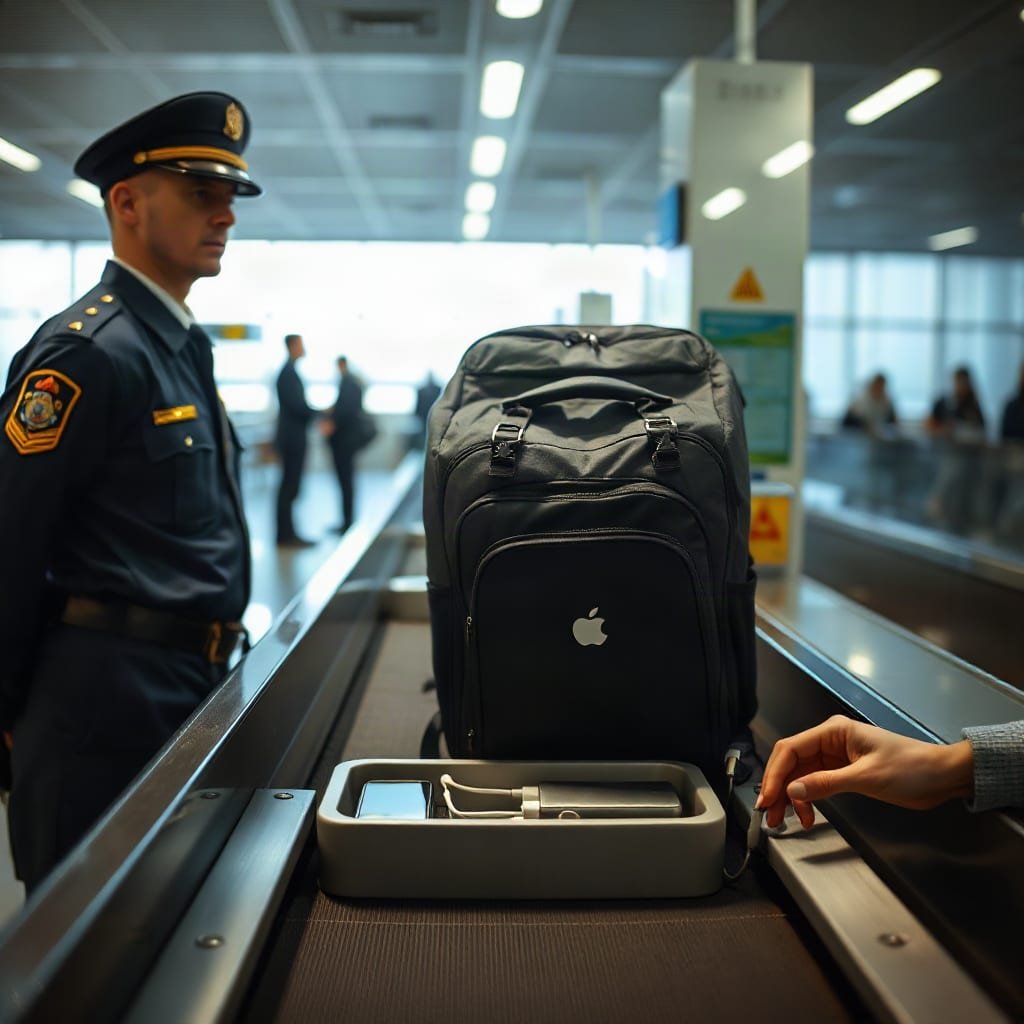
The TSA's "What Can I Bring?" guidance follows the FAA position. Power banks are allowed in carry-on bags and not in checked bags. Screening officers will often ask you to pull the bank out of your bag for a separate X-ray view. That's normal, not suspicious.
Outside the US, the picture is nearly identical, because the underlying standard is global. ICAO sets the technical rules, IATA turns them into airline-facing regulations, and national regulators such as the FAA and EASA apply them. If you're asking whether you can put a power bank in checked luggage on an international flight, the answer is the same: no. What changes from country to country is the detail around it:
- Airline approval procedures for the 100-160Wh band differ by carrier.
- Quantity caps on how many spare batteries you can carry are set by some airlines, not by ICAO.
- Certification rules for power banks are added by some countries, so check the regulator at your destination.
- In-flight use is restricted by a growing number of airlines, even when carrying the bank is perfectly legal.
The quick rule: legality of carrying is almost universal, but the fine print is airline by airline.
Do the Wh Math: Is Your Power Bank Under the Line?
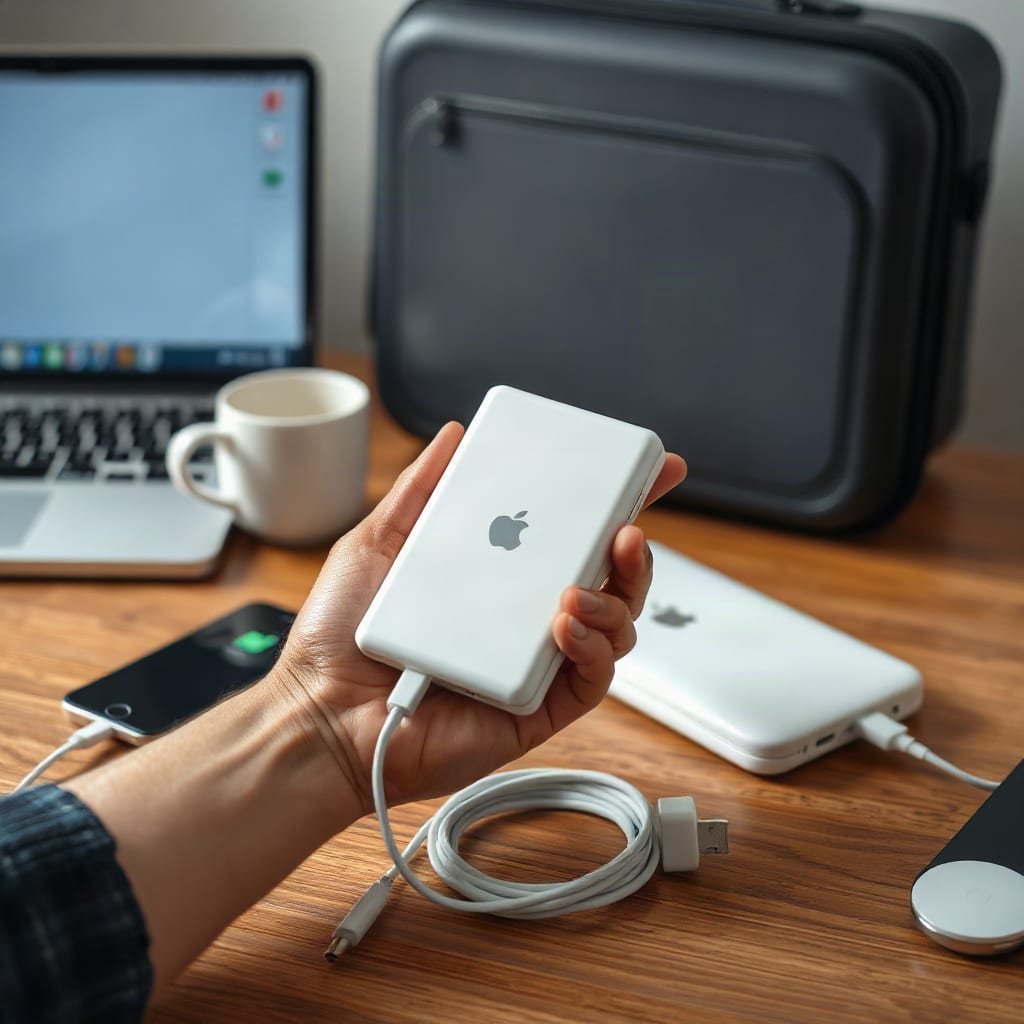
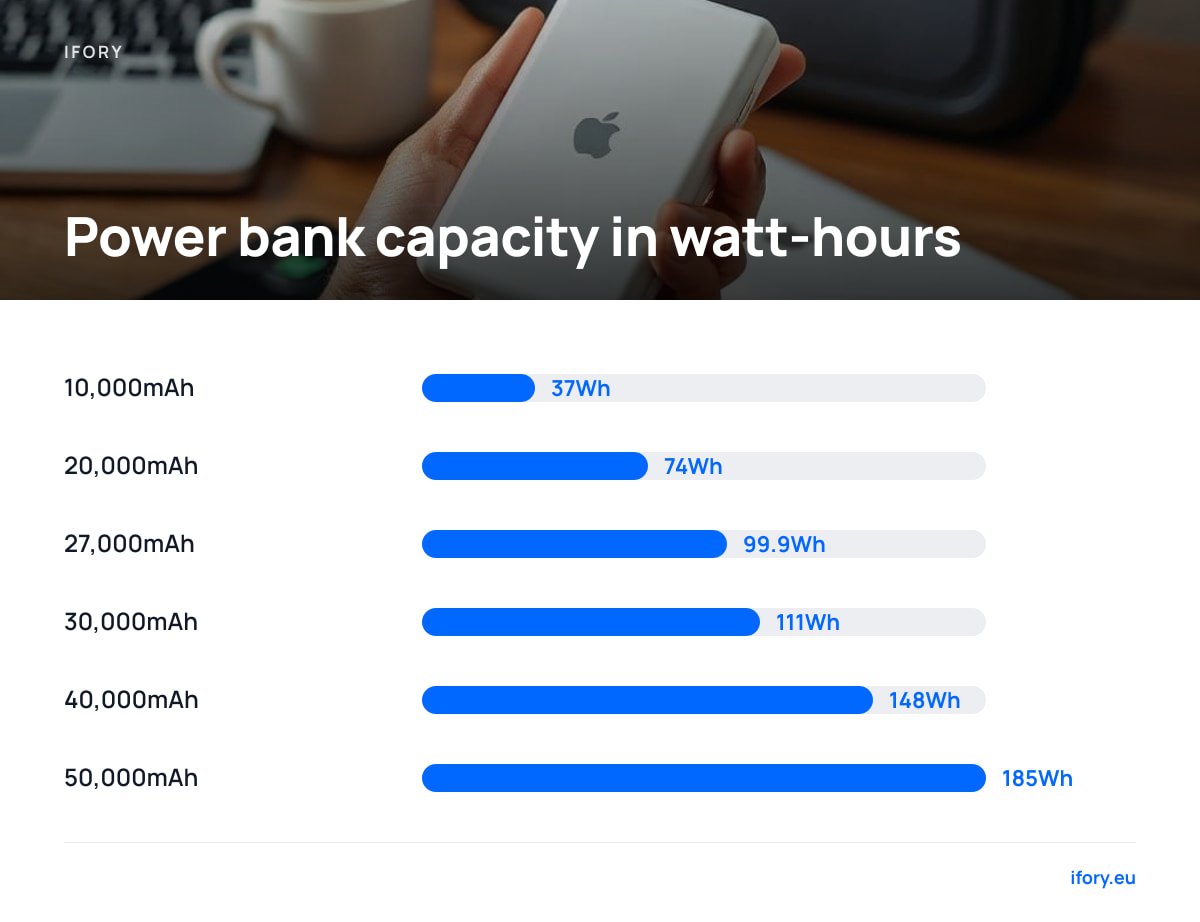
Airlines don't care about mAh. They care about watt-hours, because Wh measures stored energy and mAh doesn't (it depends on voltage). Lithium-ion cells in power banks are rated around 3.7V, so the formula is: mAh ÷ 1000 × 3.7 = Wh.
| Power bank capacity | Approx. watt-hours | What the rule says |
|---|---|---|
| 10,000mAh | 37Wh | Carry-on, no approval |
| 20,000mAh | 74Wh | Carry-on, no approval |
| 27,000mAh | 99.9Wh | Carry-on, no approval (right at the limit) |
| 30,000mAh | 111Wh | Carry-on, airline approval, two max |
| 40,000mAh | 148Wh | Carry-on, airline approval, two max |
| 43,000mAh | 159Wh | Carry-on, airline approval, two max (at the limit) |
| 50,000mAh | 185Wh | Prohibited on passenger aircraft |
27,027mAh. That's the most capacity a power bank can hold at a standard 3.7V cell rating and still sit at exactly 100Wh, the point where "no questions asked" ends.
Two things trip people up here. First, output wattage is irrelevant. A 100W fast-charging bank isn't treated differently from a 20W one. Only stored energy counts. Second, look for the Wh figure printed on the unit. If the label shows only mAh, a security agent has to do the math or guess, and guesses rarely go in your favor.
Is a 20000mAh Power Bank Allowed on a Plane? What About 30000mAh?
A 20,000mAh power bank is allowed. It works out to about 74Wh, comfortably under the 100Wh line, so it can go in your carry-on without airline approval. Most travelers never need more.
A 30,000mAh power bank is a different story. At roughly 111Wh, it falls into the 100-160Wh band. Under IATA rules you need the airline's approval to carry it, and you're limited to two spares in that band. Plenty of airlines grant approval routinely, but you shouldn't assume it. For the full breakdown of how carriers handle that band, see our guide to power banks over 100Wh and what airlines actually allow.
My pick for most flights: two 20,000mAh banks beat one 30,000mAh. You stay under 100Wh per unit, you skip the approval step, and you get redundancy if one dies. The exception is when you need one big unit for a laptop on a long trip, where capacity per bank matters more than paperwork.
Airline Policies: United, American and the "Jet" Carriers
The rules sit on the same foundation, but carriers describe them differently.
What is the power bank policy for United Airlines?
United follows the FAA framework: power banks and spare lithium batteries go in your carry-on, not checked baggage. Banks up to 100Wh are fine, and banks between 101 and 160Wh need approval from the airline. Because airline pages get updated, confirm the details on United's dangerous goods page before you fly, especially for anything above 100Wh.
Can you put a power bank in checked luggage on American?
No. American Airlines applies the same carry-on-only rule and the same 100Wh and 160Wh thresholds. The same applies if you're searching for a specific carrier like JetBlue, Jet2 or Jetstar: the headline answer doesn't change. What can change is how the airline handles approvals and how many spares it lets you bring.
When the Obvious Answer Is Wrong: Gate-Checks, Laptops and Smart Bags
"Carry-on only" sounds simple until your trip doesn't go to plan. Here are the cases that catch people.
- Gate-checked carry-ons. When overhead bins fill up, agents tag your roller bag at the gate and send it to the hold. At that moment, your carry-on becomes checked luggage, and any power bank inside is now in the wrong place. The FAA says to remove spare batteries before a bag is gate-checked.
- Laptops and cameras. Batteries installed in devices are treated differently from spares, and the devices can technically travel in checked bags if fully powered off and protected. In practice, a laptop in the hold is a theft and damage risk, so carry it anyway.
- Smart luggage. Suitcases with built-in power banks are a minefield. Many airlines require the battery to be removable so you can carry it into the cabin. A bag with a non-removable battery can be refused outright.
- Bags with a "charging port." A pocket that holds a power bank is fine. A battery sewn in or hard to remove is not.
Pro Tip: Before you queue to board, move every power bank into your personal item, the small bag that goes under the seat. That bag is almost never gate-checked, so you can't be caught out by a full overhead bin, and if a gate agent asks to see your batteries, they're one zip away.
You Left a Power Bank in Checked Luggage: What Actually Happens
Realizing this at the carousel is awful, but how bad it gets depends on when you catch it.
- Before you've dropped the bag: Open it and take the bank out. Done.
- After check-in, before departure: Tell the airline staff immediately. They can often retrieve the bag, or have it opened, before it's loaded. This is far better than being found out.
- Flagged during screening: Checked bags are X-rayed too, and a dense battery shape stands out. You may be paged to a bag room or have the bag opened without you, and the bank may be removed.
- After landing: Nothing dramatic usually happens, but you've broken the rules. Hazmat violations can carry civil penalties in some jurisdictions, so don't treat it as a free pass.
The lesson is simple: tell someone early. Airlines would rather retrieve a bag than explain an incident report.
Get a 40,000mAh Power Bank That Won't Ground Your Trip
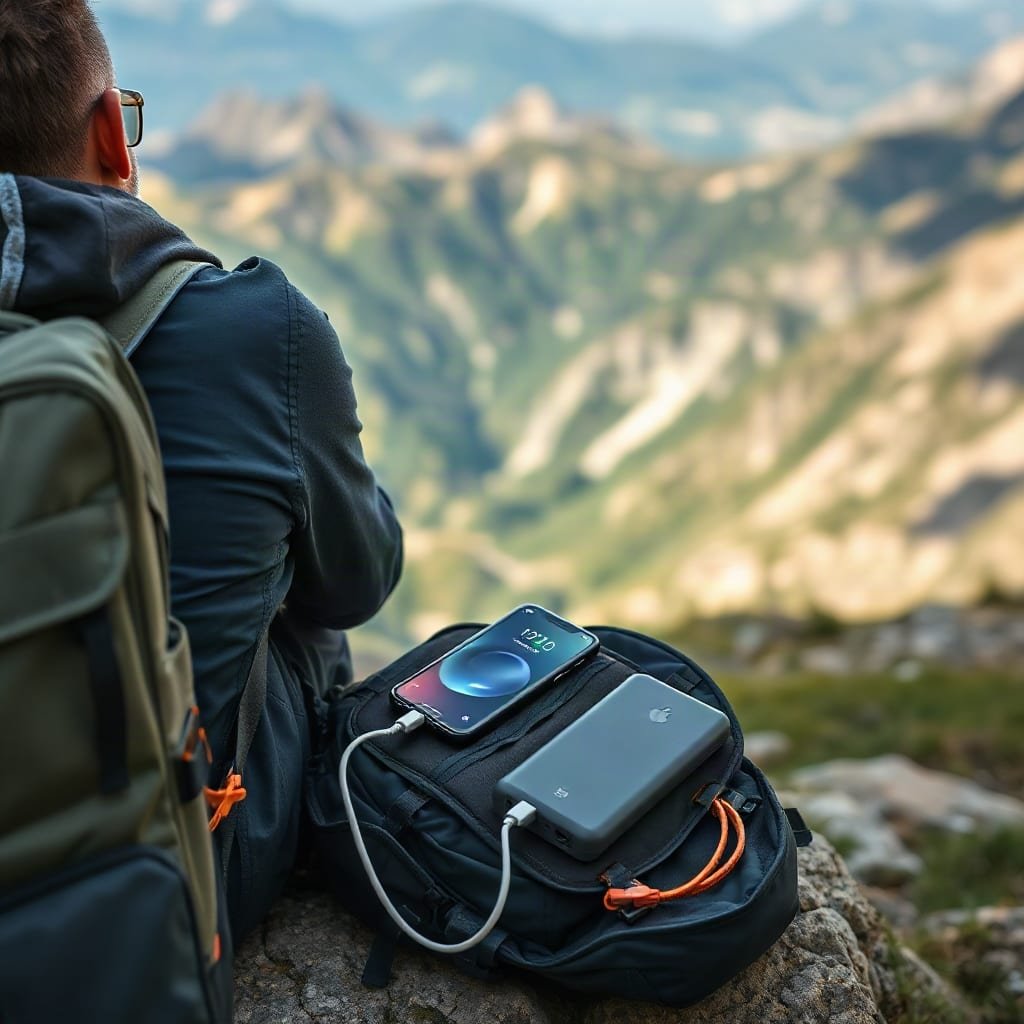
If you travel with a laptop, a handheld console and two phones, you've probably wanted something bigger than a 20,000mAh brick. The Ifory 40,000mAh 100W Power Bank is built for that: 100W fast charging, a rugged shell for campsites and dive boats, and enough capacity to run a full day of devices away from an outlet. Pair it with the Ifory 40W portable solar panel (PD, 21.88V/2.19A) and you can top it up off-grid too. The bundle often comes with the solar panel free, and orders ship free with 30-day returns. For ways to keep it charging outdoors, see our solar phone charger guide.
Here's the honest limit: at roughly 148Wh by the standard math, a 40,000mAh bank sits in the 100-160Wh band. It is carry-on only, you need your airline's approval, and you can bring only two units that size. Check the Wh figure on the label and get the airline's approval before you fly. If you'd rather skip the paperwork, take two smaller banks under 100Wh instead.
Frequently Asked Questions
Can I pack a power bank in my checked luggage?
No. Power banks are spare lithium batteries, and aviation rules from ICAO, IATA, the FAA and the TSA require them in carry-on baggage. The only safe approach is to keep them in your cabin bag or personal item.
What are the TSA rules for power banks?
The TSA allows power banks in carry-on bags and prohibits them in checked bags. Banks up to 100Wh are allowed without approval, banks between 101 and 160Wh need airline approval and are limited to two, and anything above 160Wh is not permitted on passenger aircraft.
Is a 20000mAh power bank allowed on a flight?
Yes. At a standard 3.7V cell rating, 20,000mAh is about 74Wh, which is under the 100Wh limit. It can go in your carry-on without needing airline approval.
Is a 30000mAh power bank allowed on a flight?
Usually, with approval. A 30,000mAh bank is about 111Wh, which falls in the 100-160Wh band, so you need your airline's permission and can carry two at most. Always confirm with the airline before the flight.
What is the power bank policy for United Airlines?
United follows the FAA framework: power banks go in the cabin, not in checked bags, with 100Wh as the no-approval limit and 160Wh as the cap with approval. Check United's dangerous goods page before flying, as airline policies are updated from time to time.
Sources
- Lithium Batteries (PackSafe) | Federal Aviation Administration
- What Can I Bring? | Transportation Security Administration
- Lithium Battery Guidance for Passengers and Cargo | International Air Transport Association
- Dangerous Goods | International Civil Aviation Organization