
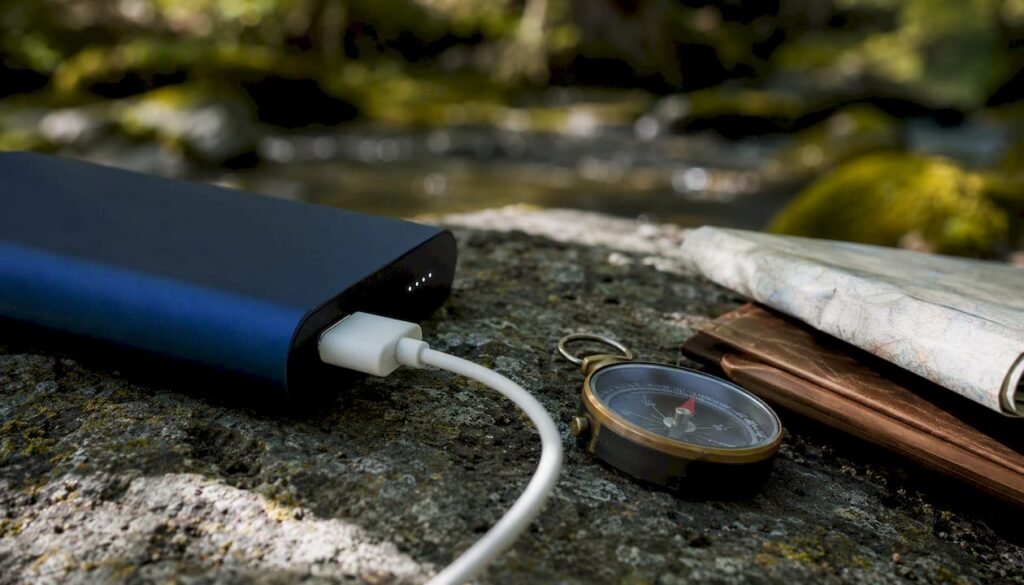
Power banks are safe when you use, charge, and store them correctly, but a damaged or abused lithium-ion cell can produce a fire that’s fast, hot, and hard to put out. If your unit is swollen, unusually hot to the touch, smoking, leaking, or gives off a sweet or acrid smell, stop using it immediately. A 2025 recall of more than 1.1 million power banks followed 19 fire and explosion reports, so this isn’t a theoretical risk.
Here’s what to do right now if any of those warning signs apply to a power bank you own:
- Unplug it and stop charging or using it immediately.
- Move it to a hard, non-flammable surface, like tile or concrete, away from anything that burns.
- Check the manufacturer’s website or the CPSC recall listings to see if your model has been flagged.
- Never leave it charging unattended or overnight while you sort out the problem.
The rest of this guide walks through why these risks exist, how to spot trouble early, and how to charge, store, transport, and eventually retire a power bank without creating a hazard for yourself or anyone else.
Key Takeaways
Power bank safety depends on recognizing warning signs early, charging on hard non-flammable surfaces, and retiring any unit that shows swelling, heat, or odor without delay.
| Point | Details |
|---|---|
| Watch for physical signs | Stop using any power bank that’s swollen, overheating, smoking, leaking, or smells unusual. |
| Charge on safe surfaces | Use hard, non-flammable surfaces and avoid unattended or overnight charging sessions. |
| Check for real protection | Look for BMS, short-circuit protection, and certifications like IEC 62133 or UN38.3 before buying. |
| Follow airline Wh limits | Carry power banks in cabin luggage only, and confirm airline rules near the 100Wh and 160Wh thresholds. |
| Recycle, don’t trash | Take damaged or dead units to a battery collection point instead of a household bin. |
| Choose engineered protection | Ifory’s 40,000mAh power bank combines IP67 sealing, anti-drop housing, BMS protection, and an LED status display for outdoor use. |
Table of Contents
- Power Bank Safety Starts With Understanding the Battery Inside
- Warning Signs Your Power Bank Has Gone Bad
- How to Choose a Safe Power Bank Before You Buy
- Safe Charging Practices That Actually Prevent Fires
- Storing, Packing, and Flying With a Power Bank
- When to Retire and Recycle a Power Bank
- What to Do if a Power Bank Smokes or Catches Fire
- How Manufacturers Engineer Safer Power Banks
- An Engineer’s View on the One Habit That Matters Most
- Get a Power Bank Built With These Protections From the Start
- Where to Verify Current Power Bank Safety Guidance
- Frequently Asked Questions About Power Bank Safety
- Sources
Power Bank Safety Starts With Understanding the Battery Inside
A power bank is a portable battery pack, almost always built around lithium-ion or lithium-polymer cells, that stores energy and releases it through a USB or USB-C port when you need to charge a phone, camera, or laptop. That chemistry is what makes modern power banks so compact and capable. It’s also the source of every safety concern in this article.
Lithium-ion cells pack a lot of energy into a small space, which is exactly why a phone-sized brick can hold enough charge for several device recharges. That same energy density means a damaged or overstressed cell can enter thermal runaway, a chain reaction where internal heat builds faster than it can escape, triggering more heat, more pressure, and eventually fire or a small explosion. The Verge’s reporting on power bank safety notes that these fires are rare but genuinely intense once they start, and they’re difficult to extinguish with typical household methods.
Rugged housings and water resistance ratings protect against drops and splashes, but they don’t make the cells inside immune to internal damage. An impact hard enough to bend or puncture a cell, or water that finds its way past a seal, can compromise the battery even when the outer shell looks fine. Reporting on the 2025 recall noted that experts caution IP ratings and drop protection don’t guarantee internal-cell integrity after a hard fall or submersion.
Pro Tip: Never charge a power bank inside a sealed bag, under a pillow, or in a drawer. Lithium-ion cells generate heat during charging, and trapped heat with no airflow is one of the easiest ways to push a healthy cell toward failure.
Warning Signs Your Power Bank Has Gone Bad
Most power banks live a long, uneventful life. But knowing the failure modes helps you catch a problem before it becomes a fire.
The technical failure modes worth knowing:
- Thermal runaway — an uncontrolled heat spiral inside the cell, usually the end stage of another failure.
- Internal short circuit — a break in the cell’s internal separator that lets current flow somewhere it shouldn’t.
- Cell swelling — gas buildup from a breakdown of the internal chemistry, visible as a bulge in the casing.
- Venting — the cell releasing gas or pressure, sometimes with a hiss or a burning smell.
- Electrolyte leakage — visible liquid or residue, often with a sharp chemical odor.
- Insulation failure — damaged wiring or casing that exposes internal components.
You don’t need to diagnose which failure mode is happening. You just need to recognize the outward signs: a case that bulges or won’t sit flat anymore, a unit that gets hot even at low charge speeds, any smoke, sparks, or unusual smell, or output that cuts in and out unpredictably. Any one of these is reason enough to stop using the device.
These incidents aren’t common, but they’re not hypothetical either. The 2025 CPSC recall covered more than 1.1 million units after 19 fire and explosion incidents that caused over $60,700 in property damage. Age plays a role too: batteries lose capacity and performance over time, and a pack that used to charge your phone twice but now barely manages once is telling you its internal chemistry is degrading.
How to Choose a Safe Power Bank Before You Buy
The safest power bank is the one with real protection circuitry, not just a high mAh number printed on the box. Look for a battery management system (BMS) that actively monitors and limits overcharge, over-current, and short-circuit conditions, plus temperature sensors that can cut power if the cell runs hot.
Before you buy, check for:
- A stated battery management system (BMS) with overcharge, over-current, and short-circuit protection.
- Temperature monitoring or thermal cutoff functionality.
- Safety certifications or testing standards referenced by the manufacturer, such as IEC 62133 (cell and battery safety), UN38.3 (transport testing for lithium batteries), or CE marking for the European market.
- A manufacturer with a visible recall or support page, not just a storefront listing.
- Realistic capacity claims that match the physical size and weight of the unit.
That last point trips up more buyers than any other. A pack claiming 50,000mAh that weighs less than a phone is almost certainly inflating its rating, since real lithium-ion cells have a fairly fixed energy density per gram.
To estimate watt-hours from the mAh rating on the box, multiply the mAh by the nominal voltage (usually 3.7V for a single lithium-ion cell) and divide by 1,000. It’s a rough figure, since manufacturers calculate mAh differently, but it gets you close enough to know whether you’re near an airline threshold.
Pro Tip: If a listing doesn’t mention any protection circuitry, certification, or manufacturer contact information at all, treat that silence as a red flag. Reputable brands publish this information because it’s a selling point, not a footnote.
Safe Charging Practices That Actually Prevent Fires
Charge your power bank on a hard, non-flammable surface, at room temperature, and never leave it charging unattended overnight. That single habit change addresses the majority of everyday risk, according to safety guidance from Product Safety Australia, which recommends concrete, ceramic, or steel surfaces over carpet, bedding, or wood furniture.
A few more habits worth building into your routine:
- Use the cable and charger the manufacturer recommends, rather than whatever cable happens to be closest.
- Don’t charge a power bank while it’s tucked under a pillow, blanket, or inside a closed bag.
- Avoid charging a device from the power bank at the same time the power bank itself is being charged, unless the manufacturer explicitly says pass-through charging is supported.
- Keep the unit away from water, direct sun, and metal objects like coins or keys that can bridge the terminals in a bag or drawer.
Electrical Safety First points to overnight, unattended charging as one of the riskiest habits people fall into simply out of convenience. Most lithium-ion batteries operate best between roughly 32°F and 113°F (0°C to 45°C); charging outside that range, especially in freezing cold or direct heat, stresses the cell chemistry and accelerates wear.
Pro Tip: If you’re not using the power bank daily, charge it to somewhere between 50% and 80% rather than topping it off to 100% every time. Lithium-ion cells experience less chemical stress sitting at partial charge, which means a longer usable lifespan before capacity starts dropping off.
Storing, Packing, and Flying With a Power Bank
Store power banks in a cool, dry place, and always carry them in your cabin bag when flying, never in checked luggage. Airlines treat lithium-ion batteries as a fire risk in the cargo hold specifically because there’s no crew present to spot and respond to smoke.
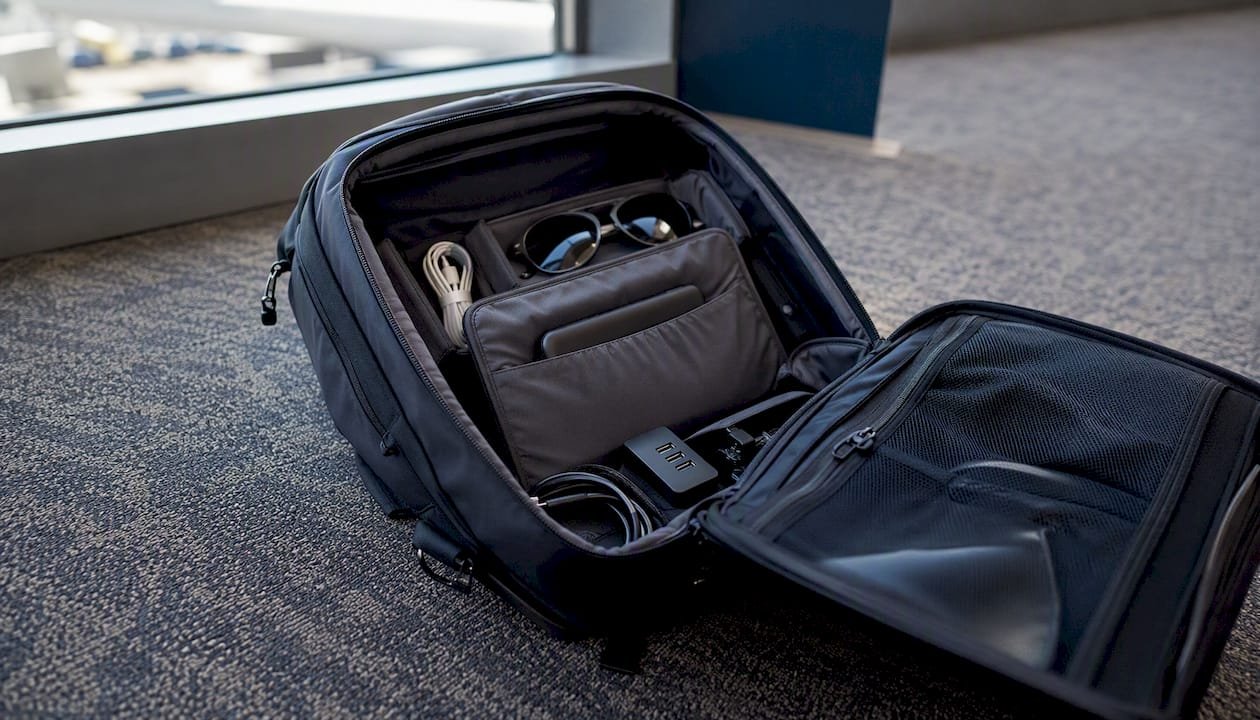
At home, keep power banks out of direct sunlight, away from radiators, and out of a hot car glovebox, since heat is the single biggest accelerant of battery degradation. When packing one for travel, use its original packaging or a case with covered terminals, and avoid tossing loose power banks into a bag where metal keys, coins, or other batteries can make contact with the ports.
Airline rules generally follow a tiered system based on watt-hours: units up to 100Wh are typically allowed in carry-on without special approval, while units between 100Wh and 160Wh require airline permission and can never go in checked baggage. Anything above 160Wh is usually banned outright from commercial flights. Since a 40,000mAh power bank sits close to the 148Wh mark, it’s worth confirming your specific airline’s policy before you pack it, since some carriers apply stricter limits than the general guideline.
Pro Tip: Snap a photo of your power bank’s printed Wh rating before you travel. If airport security asks about it, you’ll have the number on hand instead of digging through settings or guessing.
When to Retire and Recycle a Power Bank
Retire a power bank the moment you see bulging, cracking, persistent overheating, or any leaking residue, and never wait to see if the problem “goes away.” These are the signs that internal damage is present and progressing, not cosmetic quirks.
- Confirm the problem. Check for swelling, heat during normal use, unusual smells, or a recall notice tied to your model.
- Stop using it immediately if any of those signs are present, and avoid charging it even once more to “get it done.”
- Contact the manufacturer or retailer for recall instructions if applicable, since some companies offer prepaid return shipping for recalled units.
- Locate a battery collection point through a service like the Call2Recycle locator, which lists drop-off sites for lithium-ion batteries.
- Never put it in household trash. Waste-collection trucks compact and crush garbage, and a damaged lithium-ion cell can ignite under that pressure, a risk flagged directly by Germany’s environmental agency.
Beyond visible damage, a few quieter signs mean it’s time to move on:
- Noticeably shorter run times compared to when the unit was new.
- A charge cycle that used to take two hours now taking four or more.
- A model that appears on an official recall list, even if your unit currently looks fine.
What to Do if a Power Bank Smokes or Catches Fire
Get people away from the device first. Everything else comes second.
If it’s safe to do so without putting yourself at risk, unplug the power bank, move it to a non-flammable surface like a concrete floor or a metal sink, and close doors to slow the spread of smoke or fire to the rest of the room. If the situation is already producing open flame, heavy smoke, or you’re unsure it’s safe to approach, evacuate the area and call emergency services rather than attempting to handle it yourself.
Lithium-ion fires don’t always respond the way people expect. Dousing a thermal runaway event with water as a first response can, in some cases, worsen the reaction rather than calm it. The safer instinct is distance and isolation first, professional response second.
Laboratory safety guidance from institutions like Harvard’s Environmental Health and Safety office reinforces the same core principle for consumers: isolate a damaged lithium-ion cell from anything flammable, and don’t attempt to move or handle it more than necessary if it’s actively venting or smoking.
Pro Tip: Keep a basic understanding of where your home fire extinguisher is and what type it is. A standard multipurpose extinguisher can help contain a small battery fire in its early stage, but it’s not a substitute for calling emergency services once flames are established.
How Manufacturers Engineer Safer Power Banks
Good power bank safety starts with the battery management system and continues through the physical design of the enclosure itself. A well-designed BMS is constantly monitoring voltage, current, and temperature, and it can cut power the instant something moves outside safe limits, well before a human would ever notice a problem.
The protective layers that matter, and what they actually do:
| Protection layer | What it does |
|---|---|
| Cell chemistry selection | Higher-quality lithium-ion or lithium-polymer cells with more stable internal chemistry reduce baseline risk. |
| Battery management system (BMS) | Continuously monitors voltage and current, cutting power if readings move outside safe thresholds. |
| Short-circuit protection | Detects an unintended current path and interrupts it before heat builds. |
| Thermal cutoff | Physically or electronically stops charging/discharging if internal temperature crosses a safe limit. |
| Venting design | Controlled pressure-release points direct gas away from the user if a cell does vent. |
| Mechanical enclosure | Shock-absorbing housings and sealed ports (like IP-rated designs) reduce the odds of impact or moisture reaching the cells. |
Layered protection like this is what Portable Energy Lab describes as the baseline checklist for choosing a safe unit: overcharge and over-discharge protection, short-circuit protection, over-current and over-voltage protection, and temperature monitoring, all working together rather than any single feature carrying the load alone.
Ifory’s 40,000mAh power bank illustrates how these principles show up in a real product built for outdoor use. Its IP67 rating protects the internal cells and ports from dust and temporary submersion, and its anti-drop structure absorbs impact energy that would otherwise reach the battery directly. Onboard BMS protection handles overcharge, over-current, and short-circuit conditions, and the real-time LED display lets you see charge status and temperature behavior at a glance rather than guessing. That kind of visible feedback matters more than people expect: a unit that tells you something’s wrong before it becomes a hazard is doing exactly what good design is supposed to do.
An Engineer’s View on the One Habit That Matters Most
If there’s a single behavior change that improves power bank safety more than any other, it’s this: stop charging devices unattended overnight. Nearly every serious incident traces back to a battery under stress for hours with nobody around to notice the early warning signs, whether that’s heat building up, a slight bulge forming, or a smell that would have prompted immediate action during daylight hours.
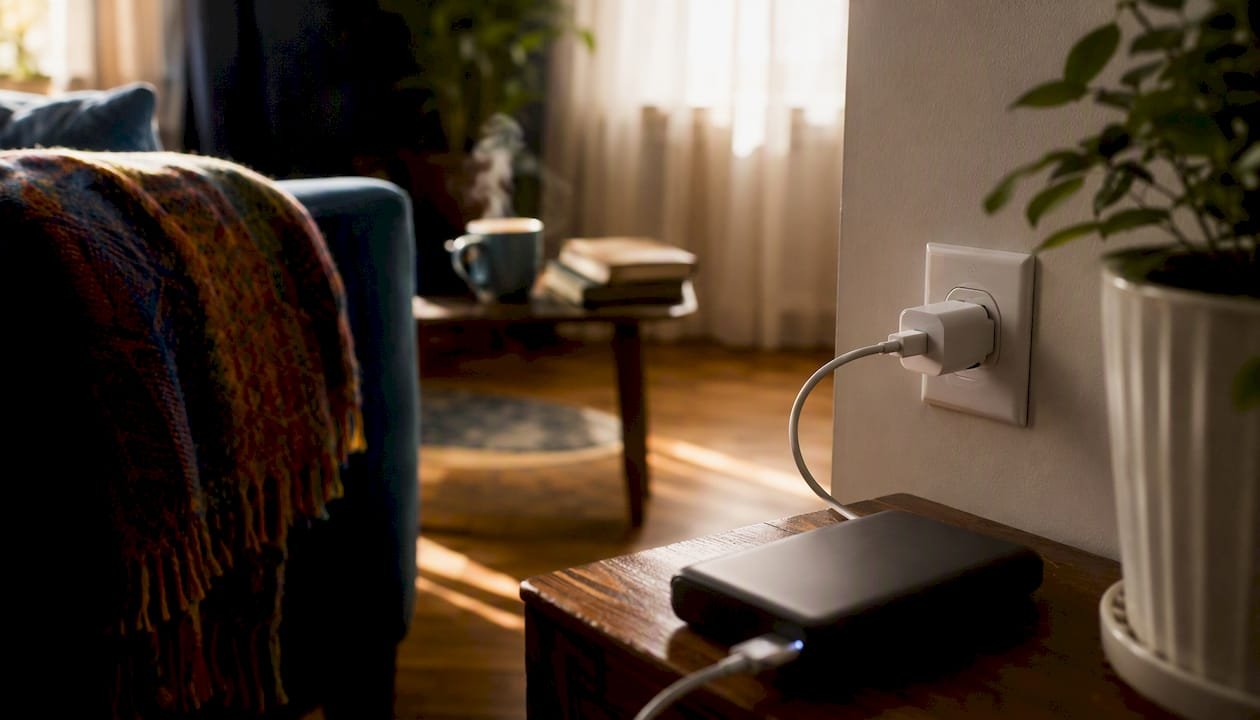
The most common misuse pattern isn’t dramatic. It’s someone plugging in a power bank before bed, tossing it under a pillow or blanket for convenience, and waking up eight hours later. Heat has nowhere to go in that setup, and the battery has been under load the entire time nobody was watching. Design choices like thermal cutoffs and visible LED status indicators exist specifically because engineers know users won’t always follow the ideal charging routine. The goal isn’t to assume perfect behavior. It’s to build in a backstop for the moments when a busy person forgets.
Get a Power Bank Built With These Protections From the Start
Reading a safety checklist is one thing. Owning a power bank that’s actually engineered around it is another. Ifory’s 40,000mAh, 100W power bank pairs a protective BMS with an IP67-rated, anti-drop housing, so the same design that survives a drop on a hiking trail or a splash on a kayak also keeps the cells inside better shielded from the impact and moisture damage this guide warns about.

The real-time LED display shows charge level and status at a glance, so you’re not left guessing whether a unit is behaving normally after a long day outdoors. For anyone who read the storage and travel sections above and realized their current power bank has no visible way to flag a problem, that’s the gap Ifory’s design closes. Browse the full power bank lineup or pair your unit with a 40W portable solar panel for extended off-grid charging, and check current availability before your next trip.
Where to Verify Current Power Bank Safety Guidance
Manufacturer instructions, recall notices, and national safety bodies update their guidance as new incidents and standards emerge, so it’s worth checking these sources directly rather than relying on secondhand summaries, especially before a trip or after an incident with your own unit.
| Source | What it covers |
|---|---|
| CPSC recall listing | Official U.S. recall details, incident counts, and return instructions |
| Product Safety Australia | Consumer guidance on safe charging surfaces and storage |
| Electrical Safety First | Charging habits, cable pairing, and everyday hazard avoidance |
| Call2Recycle locator | Drop-off points for lithium-ion battery recycling |
| Umweltbundesamt battery guidance | Environmental rules on lithium-ion battery disposal |
Frequently Asked Questions About Power Bank Safety
Is it safe to leave a power bank charging overnight?
It’s best avoided. Overnight charging means nobody’s around to catch early warning signs like heat buildup or a developing bulge, and Electrical Safety First points to unattended overnight charging as one of the more common contributors to incidents.
Can a power bank explode in your pocket or bag?
It’s rare, but a damaged or defective cell can vent or ignite without warning, which is why any unit showing swelling, heat, or an odd smell should be removed from a bag or pocket immediately and set on a hard, non-flammable surface.
What’s the difference between a power station and a power bank?
A power bank is a compact, pocket-sized battery pack meant for charging phones and small devices on the go, while a power station is a larger, heavier unit with far more capacity, often built to run larger appliances or provide backup power at home. The safety principles overlap, but power stations typically carry additional certifications given their higher energy storage.
How do I know if my power bank capacity claim is accurate?
Compare the stated mAh against the unit’s physical weight and size. Real lithium-ion cells have a fairly consistent energy density, so a pack claiming an unusually high capacity for its weight is likely inflating the number.
Do I need to declare my power bank at airport security?
You generally don’t need to declare it, but you must carry it in cabin luggage, not checked bags, and larger units approaching the 100Wh to 160Wh range may require prior airline approval, so it’s worth checking with your carrier before you fly.
This article provides general safety information and isn’t a substitute for the specific instructions that come with your device or guidance from a qualified safety professional. Always follow your manufacturer’s manual and check current recall listings for your exact model.
Sources
- More than One Million Anker Power Banks Recalled Due to Fire and Burn Hazards (CPSC)
- Power banks guide | Product Safety Australia
- How to safely maintain, use, and dispose of your power banks | The Verge
- Electrical Safety Advice for Power Banks | Electrical Safety First